


Weight conversions look simple on paper, yet they quietly shape how we understand fitness, health, and even everyday measurements. If you have ever seen a workout plan written in kilograms while your dumbbells are labeled in pounds, you already know the small confusion this creates.
The good news is that converting either 200 pounds to kilograms or 200 kilograms to pounds is not complicated at all. Once you understand the logic behind it, the numbers start to make sense almost instantly.
Let’s break it down properly so you never have to second guess it again.
The Exact Conversion of 200 Pounds to Kilograms
At the core of this conversion is a fixed relationship between the two units.
Standard Formula
To convert pounds into kilograms, you multiply the value in pounds by this factor.
Calculation Example
| Step | Calculation |
| Multiply | 200 × 0.453592 |
| Result | 90.7185 kg |
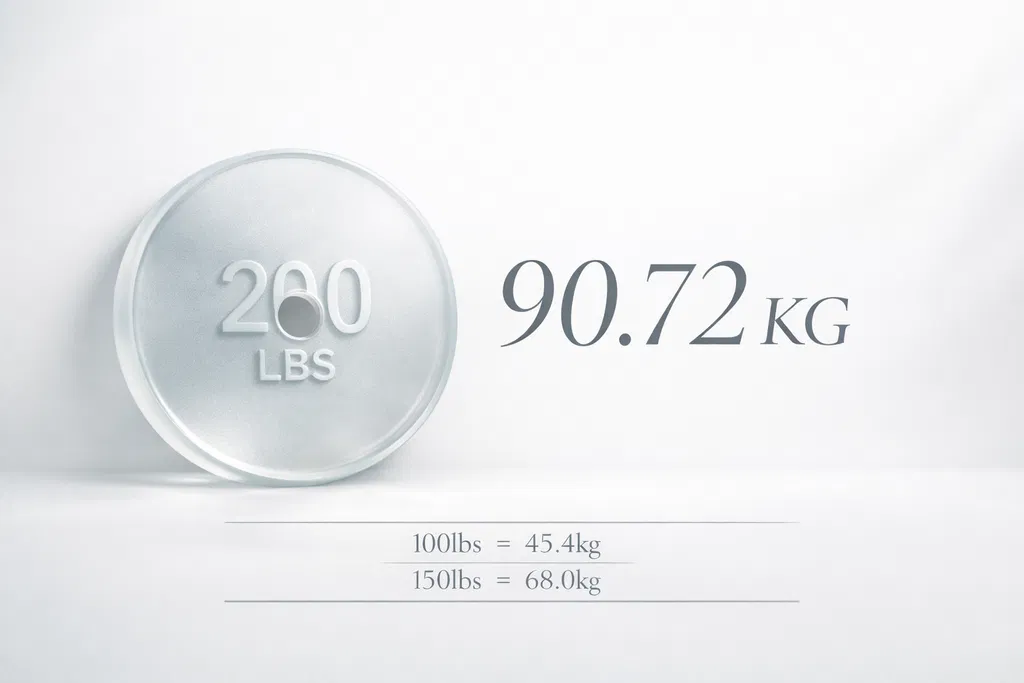
So, 200 pounds equals approximately 90.72 kilograms.
In most practical situations, people round it slightly.
- 200 lbs ≈ 90.7 kg
That small rounding makes it easier to remember without losing meaningful accuracy.
Why Pounds and Kilograms Are Different
The reason this conversion exists at all comes down to measurement systems.
Two Systems, One Purpose
| System | Unit | Usage |
| Imperial system | Pound (lb) | Common in the United States |
| Metric system | Kilogram (kg) | Used globally and in science |
The metric system is structured and consistent. The imperial system is more historical and region specific. Both measure the same thing, mass or weight, but in different ways.
This difference is why conversions matter, especially in global contexts.
Understanding the Meaning Behind the Numbers
Numbers alone can feel abstract. It helps to connect them to real situations.
Think about a heavy barbell setup at a gym. A total weight of 200 pounds might feel significant during a lift. When converted, that becomes about 90.7 kilograms.
The weight does not change, only the label does. Yet the perception often shifts depending on what unit you are used to.
Why This Conversion Matters in Fitness
If you follow workout programs, especially online ones, you will often see weights listed in kilograms.
Practical Benefits
- Helps you follow international workout plans accurately
- Allows better tracking of strength progress
- Prevents underloading or overloading weights
- Improves consistency in training records
Example Scenario
A beginner might start with:
- 10 lb dumbbell ≈ 4.54 kg
As progress builds, the weights increase gradually. Understanding conversions ensures you always know exactly what you are lifting.
Real World Use Beyond the Gym
This conversion is not limited to fitness. It appears in several everyday situations.
Common Applications
- Shipping and package weights
- Body weight tracking
- Medical records
- Equipment specifications
- Travel baggage limits
For example, airline baggage limits may be listed in kilograms, while your luggage scale shows pounds. Without conversion, it is easy to misjudge.
Two Simple Methods to Convert Pounds to Kilograms
There is more than one way to handle conversions, depending on how precise you need to be.
Method 1: Multiplication Method
This is the most accurate approach.
- Formula: mass in kg = mass in lb × 0.453592
Method 2: Quick Approximation
For fast mental math:
- Divide pounds by 2.2
Example:
- 200 ÷ 2.2 ≈ 90.9 kg
This is slightly less precise but very useful when you do not have a calculator.
Reverse Conversion: Kilograms to Pounds
Sometimes you need to go the other way.
Reverse Formula
- 1 kilogram = 2.20462 pounds
Example
| Step | Calculation |
| Multiply | 90.7 × 2.20462 |
| Result | ≈ 200 lbs |
This confirms the consistency of the conversion.
Quick Reference Table
Having a small reference makes things easier in daily use.
Pounds to Kilograms
| Pounds | Kilograms |
| 50 lbs | 22.68 kg |
| 100 lbs | 45.36 kg |
| 150 lbs | 68.04 kg |
| 200 lbs | 90.72 kg |
Kilograms to Pounds
| Kilograms | Pounds |
| 10 kg | 22.05 lbs |
| 25 kg | 55.12 lbs |
| 50 kg | 110.23 lbs |
| 90 kg | 198.42 lbs |
These values help you estimate quickly without recalculating every time.
A Bit of History Behind the Units
Understanding where these units come from adds a layer of clarity.
Pound
The pound traces back to the Latin word “libra,” which is why the abbreviation is “lb.” It was historically used in trade and daily measurements.
Kilogram
The kilogram comes from the metric system and was originally defined based on the mass of water. It later became the standard unit of mass in the International System of Units.
These origins explain why both systems still exist today.
Common Mistakes to Avoid
Even simple conversions can go wrong if a few details are missed.
Frequent Errors
- Using 0.45 instead of 0.453592 for precise work
- Confusing kilograms with grams
- Forgetting to round properly
- Mixing up multiplication and division
A small mistake can lead to noticeable differences, especially in technical or fitness contexts.
Tips to Remember the Conversion Easily
If you do this often, memorizing helps.
Simple Memory Tricks
- 1 lb is roughly half a kilogram
- 2.2 lbs equals 1 kg
- 200 lbs is about 90 kg
These shortcuts are not perfect, but they are practical.
Why Accuracy Still Matters
In casual situations, rounding is fine. But in professional or technical work, precision matters more.
When to Be Exact
- Scientific calculations
- Medical measurements
- Engineering work
When Approximation Works
- Gym workouts
- Everyday estimates
- Quick comparisons
Knowing when to use each approach makes your calculations more reliable.
Final Thoughts
Converting 200 pounds to kilograms is not just about getting a number. It is about understanding how different systems connect and how that knowledge applies in real life.
At its simplest, the answer is clear:
- 200 pounds equals approximately 90.72 kilograms
But beyond that number, there is a practical advantage. Whether you are lifting weights, tracking your health, or dealing with international measurements, this small piece of knowledge makes things smoother.
And once you use it a few times, it stops feeling like a calculation. It becomes instinct.
