


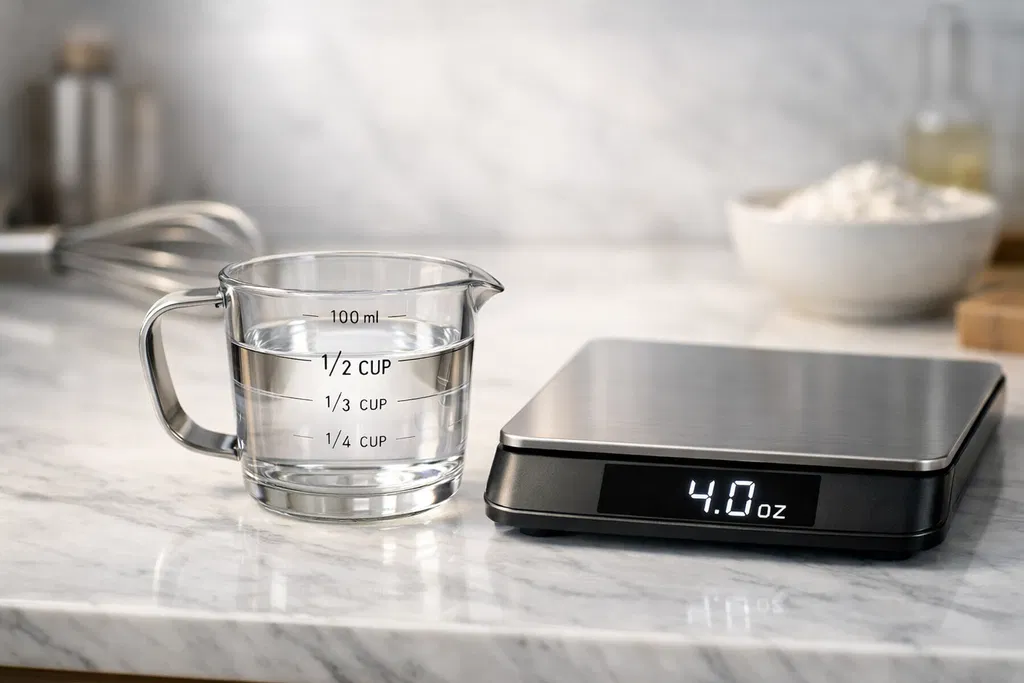
If you spend enough time in the kitchen, this question shows up sooner or later. You are halfway through a recipe, everything seems under control, and then suddenly you hit a measurement like 1/2 cup and ounces appear somewhere else. It feels small, but it can quietly decide whether your dish works or falls apart.
The short answer is simple. There are 4 fluid ounces in a 1/2 cup. But longer answer is where things get interesting, and honestly more useful.
Why This Question Matters More Than It Seems
At a glance, converting cups to ounces looks like basic math. In real cooking, it is not always that clean. Different ingredients behave differently. Liquids follow volume rules. Dry ingredients bring weight and density into play. That is where many people get confused, especially when switching between recipes or measuring systems. A slight miscalculation in baking can turn soft cookies into something closer to biscuits. In cooking, it might just change the flavor balance, which is not always a bad thing, but it is rarely intentional.
Understanding this properly saves time, ingredients, and a bit of frustration.
The Simple Conversion Everyone Should Know
Fluid Ounces and Cups
For liquids, the conversion is fixed and reliable.
| Measurement | Fluid Ounces |
| 1 cup | 8 fluid ounces |
| 1/2 cup | 4 fluid ounces |
| 1/4 cup | 2 fluid ounces |
This applies to water, milk, oil, and most liquid ingredients.
Why It Works
Fluid ounces measure volume, not weight. That means the container space matters, not how heavy the ingredient is.
So when you pour half a cup of water, you are filling a space that equals 4 fluid ounces. No surprises here.
Where Things Get Complicated
Dry Ingredients Do Not Follow the Same Rule
This is the part that trips people up. A half cup of flour does not weigh the same as a half cup of sugar. The volume is identical, but the weight is different.
Here is a quick comparison.
| Ingredient | 1 Cup Weight | 1/2 Cup Approx |
| Flour | 4.5 ounces | 2.25 ounces |
| Sugar | 7 ounces | 3.5 ounces |
| Butter | 8 ounces | 4 ounces |
Now you can see the issue. If a recipe expects precision, especially in baking, using volume instead of weight can shift the result.
Why Density Matters
Each ingredient has its own structure.
- Flour is light and airy
- Sugar is denser and more compact
- Butter sits somewhere in between
That difference changes how much actual material fits into the same cup. So while liquids behave predictably, dry ingredients require a bit more attention.
Fluid Ounces vs Dry Ounces
This distinction is often ignored, but it is essential.
Fluid Ounces
- Measure volume
- Used for liquids
- Always consistent with cups
Dry Ounces
- Measure weight
- Used for solid ingredients
- Vary depending on ingredient
A recipe that says ounces without clarification can create confusion. If it is a liquid, it usually means fluid ounces. If it is flour or sugar, it likely refers to weight.
Context matters more than the number itself.
Real Kitchen Scenario
Imagine you are making chocolate chip cookies.
The recipe lists:
- 1/2 cup milk
- 1/2 cup flour
If you treat both as 4 ounces, you will get very different results.
- Milk works correctly at 4 fluid ounces
- Flour at 4 ounces would be too much
That small difference changes the texture. The dough becomes heavier, and the final result loses its softness.
This is where many recipes quietly go wrong, especially for beginners.
Quick Reference Conversion Chart
Keeping a mental or physical chart helps more than you might expect.
Liquid Conversions
| Cups | Fluid Ounces |
| 1 cup | 8 oz |
| 3/4 cup | 6 oz |
| 1/2 cup | 4 oz |
| 1/4 cup | 2 oz |
Common Dry Ingredient Estimates
| Ingredient | 1/2 Cup Weight |
| Flour | 2.25 oz |
| Sugar | 3.5 oz |
| Cocoa powder | 2 oz |
| Butter | 4 oz |
These are approximate but reliable enough for everyday cooking.
Tips to Avoid Measurement Mistakes
You do not need to memorize everything. A few practical habits make a big difference.
Use the Right Tools
- Measuring cups for volume
- Kitchen scale for weight
A scale is especially useful for baking where precision matters more.
Read the Recipe Carefully
Look for clues:
- Liquid ingredients usually mean fluid ounces
- Dry ingredients often imply weight
If unsure, check the recipe source or use a trusted conversion chart.
Keep Conversions Simple
Stick to the basics:
- 1 cup equals 8 fluid ounces
- Half of that is always 4 fluid ounces
Once that is clear, you can adjust for ingredient type.
Do Not Overthink Everyday Cooking
Not every recipe needs perfect precision.
- Soups and sauces are forgiving
- Baking is less forgiving
Know when accuracy matters and when it does not.
Why Recipes Mix Units in the First Place
It might seem odd that recipes switch between cups, ounces, and tablespoons.
There are a few reasons:
- Different countries use different systems
- Older recipes follow traditional measurements
- Some ingredients are easier to measure by volume
- Others are more accurate by weight
This mix is not ideal, but it is part of how cooking evolved.
Once you understand the logic, it becomes easier to navigate.
A Small Detail That Improves Your Cooking
Knowing that 1/2 cup equals 4 fluid ounces might sound basic. In practice, it builds confidence. You stop second-guessing measurements. You adjust recipes more easily. You recover from small mistakes without starting over.
And sometimes, that quiet confidence is what separates a stressful cooking experience from an enjoyable one.
Conclusion
At its core, the answer is simple. A half cup equals 4 fluid ounces. But the real value lies in understanding when that rule applies and when it does not.
Liquids follow predictable volume conversions. Dry ingredients depend on weight and density. That distinction is what turns a basic measurement into practical knowledge.
Once you grasp that difference, recipes feel less confusing and more flexible. You are no longer just following instructions. You are actually understanding them.
