


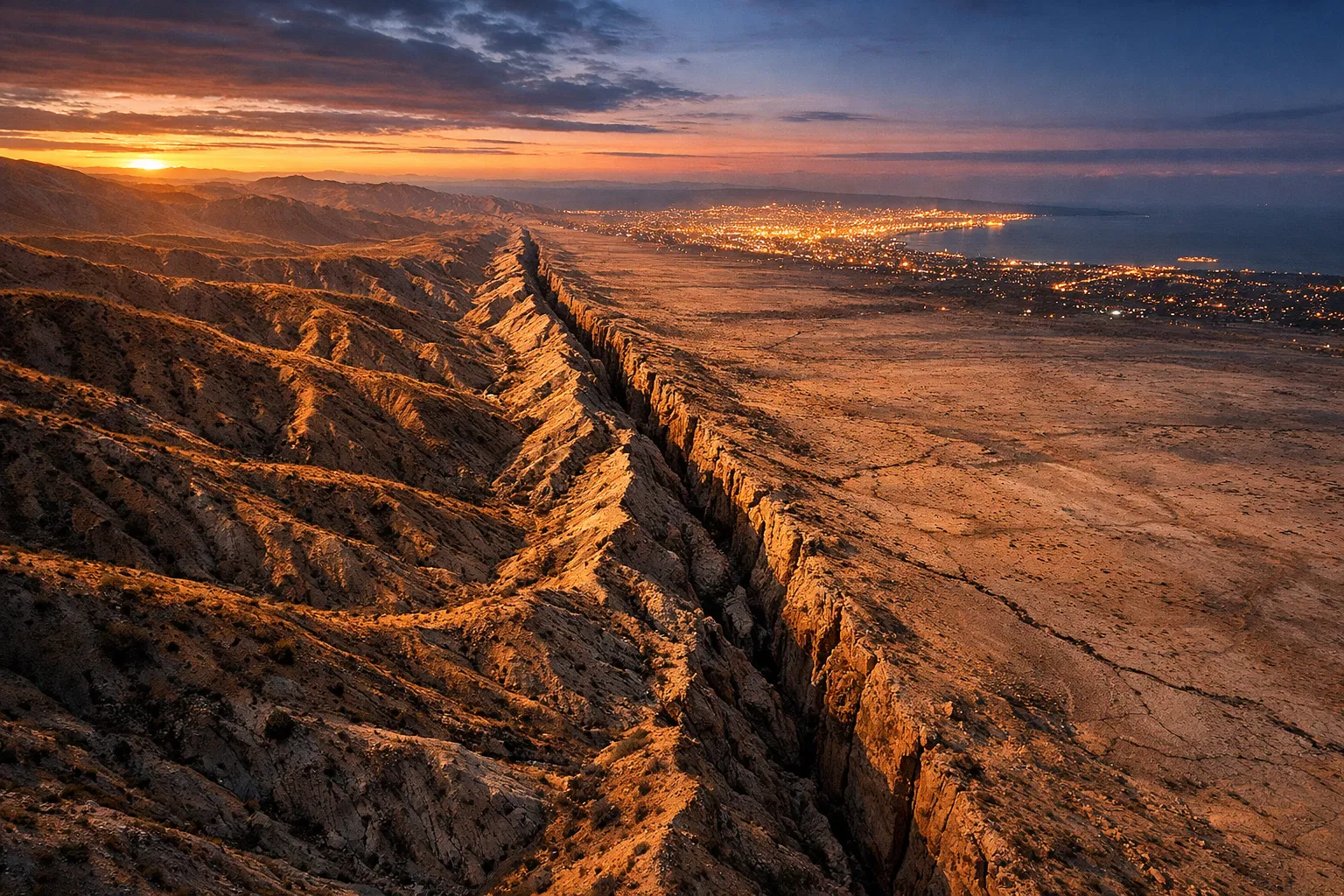
There are places on Earth that feel alive in a way that is hard to explain. Not alive in the sense of movement you can see, but alive in tension, history, and quiet power beneath your feet. The San Andreas Fault, often referred to in some contexts as Zlom San Andreas, is one of those places.
Stretching across California, this massive fault line is more than a geological boundary. It has become a symbol. A reminder of how dynamic the planet really is, and how human life continues to adapt around forces it cannot control. What makes it fascinating is not just the science, but the way it has shaped culture, stories, and even identity in the region.
Understanding the San Andreas Fault
At its core, the San Andreas Fault is a tectonic boundary. It marks the meeting point of two major plates.
What Makes It Unique
- It separates the Pacific Plate and the North American Plate
- It spans approximately 800 miles across California
- It is a transform fault, meaning the plates slide past each other horizontally
Unlike volcanoes or mountains, the fault does not constantly announce itself. It moves slowly, quietly, building pressure over time. Then, without much warning, that pressure releases as an earthquake.
That unpredictability is part of what makes it so compelling.
A Fault That Shaped California
The influence of the San Andreas Fault goes far beyond geology. It has physically shaped the land and indirectly shaped the lives of millions.
Regions Along the Fault
| Area | Notable Feature |
| Los Angeles | Dense population, high seismic risk |
| San Francisco | Historic earthquakes, coastal proximity |
| Loma Prieta | Site of the 1989 earthquake |
These regions have learned to live with the fault rather than fear it constantly. Earthquake drills, building codes, and emergency planning have all evolved because of this ever-present geological force.
The Cultural Impact of Zlom San Andreas
There is something about the idea of the ground shifting beneath you that captures the imagination. Over time, the San Andreas Fault has become more than science. It has entered storytelling, media, and everyday conversation.
Influence in Popular Culture
- Disaster films often draw inspiration from the fault
- Books and documentaries explore its history and risks
- News coverage frequently highlights seismic activity
The concept of a sudden earthquake taps into a universal human fear. At the same time, it also inspires curiosity. People want to understand what lies beneath the surface.
Interestingly, the fault has become part of California’s identity. It is mentioned casually in conversations, almost like weather. That familiarity softens its intensity, even if the risk remains.
Living Along the Fault: Adaptation and Resilience
Communities near the San Andreas Fault have not just survived. They have adapted in ways that reflect both caution and resilience.
How Communities Prepare
- Strict earthquake-resistant building codes
- Regular emergency drills in schools and workplaces
- Public awareness campaigns about safety measures
Living near a fault line changes perspective. It creates a kind of awareness that is always present, even if it sits quietly in the background.
People still go to work, attend school, and build lives. The difference is that preparedness becomes part of routine life.
The 1989 Loma Prieta Earthquake: A Defining Moment
One of the most significant events tied to the San Andreas Fault occurred in 1989.
The 1989 Loma Prieta earthquake struck Northern California and left a lasting impact. It caused widespread damage, disrupted infrastructure, and reshaped how the region approached seismic safety.
Key Facts About the Event
| Detail | Information |
| Year | 1989 |
| Magnitude | 6.9 |
| Impact | Major infrastructure damage |
| Legacy | Improved safety regulations |
While the destruction was severe, the aftermath revealed something equally important. Communities came together. Recovery efforts strengthened social bonds. Policies improved. In many ways, the earthquake became a turning point.
The Role of Science and Ongoing Research
The San Andreas Fault continues to be a focus of intense scientific study. Researchers are constantly trying to better understand how and when earthquakes occur.
What Scientists Study
- Plate movement and stress buildup
- Seismic wave patterns
- Historical earthquake data
- Early warning systems
Their goal is not to stop earthquakes. That is not possible. Instead, they aim to reduce risk and improve response times.
Modern advancements have led to systems that can provide seconds of warning before shaking begins. It may not sound like much, but even a few seconds can save lives.
Why the Fault Captivates the Human Mind
There is a reason people are drawn to the idea of the San Andreas Fault. It represents something larger than daily life.
It is:
- A symbol of nature’s power
- A reminder of human vulnerability
- A source of scientific curiosity
At the same time, it reflects human strength. People continue to build cities, create art, and live fully in areas where the ground itself is uncertain.
There is a quiet defiance in that.
Lessons from Zlom San Andreas
The story of the San Andreas Fault is not just about earthquakes. It is about learning to exist alongside forces that cannot be controlled.
Key Takeaways
- Nature operates on its own terms
- Preparation is more powerful than fear
- Communities grow stronger through shared challenges
It is easy to think of natural disasters only in terms of destruction. But they also reveal resilience, innovation, and cooperation.
A Living, Shifting Legacy
The San Andreas Fault is not static. It continues to move, evolve, and shape the world around it. Its legacy is still being written, not just in geological layers but in human stories.
Standing near it, you might not see anything dramatic. Just land stretching out quietly. But beneath that calm surface lies immense energy. And maybe that is what makes it so fascinating.
It reminds us that even when everything appears still, the world is constantly in motion.
