


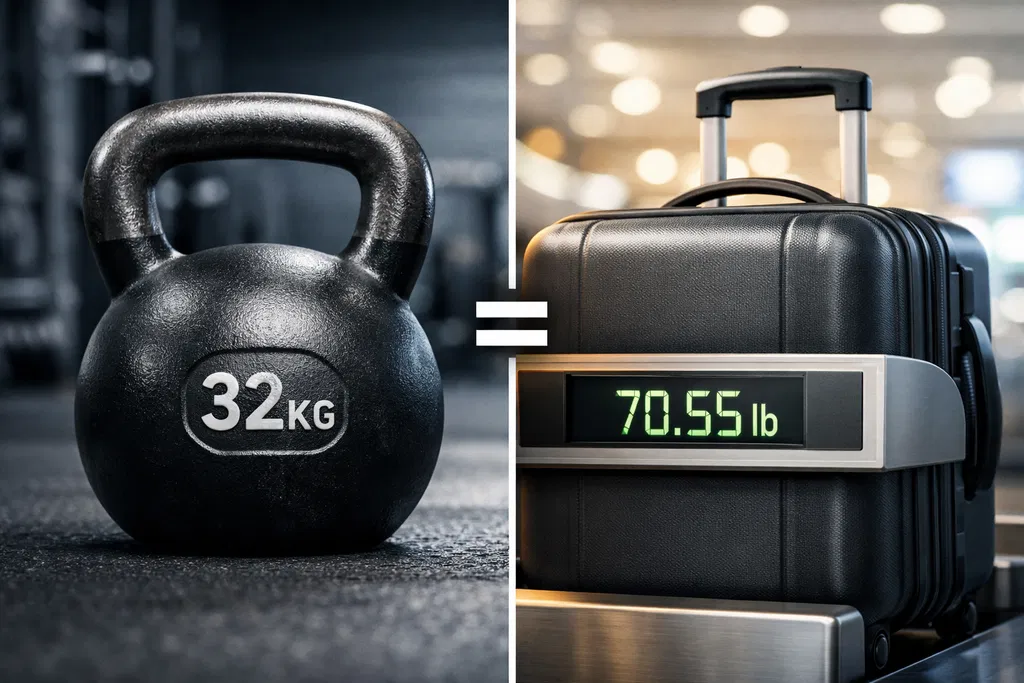
If you have ever paused mid-task to convert kilograms into pounds, you are not alone. It usually happens at the most inconvenient moment. You are weighing luggage, reading a product label, or checking your fitness progress, and suddenly you are stuck wondering what 32 kg actually means in pounds.
The answer itself is simple.
32 kilograms equals approximately 70.55 pounds.
But stopping at the number does not help much in real life. What actually matters is understanding how that number works, when to round it, and how to handle similar conversions without thinking twice.
Understanding the Difference Between Kilograms and Pounds
Before getting into calculations, it helps to understand what these units represent. This is where most confusion quietly begins.
What Is a Kilogram
A kilogram is a metric unit of mass. It is used almost everywhere in the world and is part of a system designed for simplicity. The metric system works in multiples of ten, which makes conversions within it very straightforward.
In everyday terms, kilograms are used for body weight, groceries, luggage, and almost anything that needs a clear, universal measurement.
What Is a Pound
A pound belongs to the imperial system, which developed separately and is still widely used in countries like the United States. Unlike the metric system, it does not follow a clean base-10 structure, which is why conversions often feel less intuitive.
The abbreviation “lb” comes from the Latin word “libra,” a small historical detail that still shows up in modern measurements.
The Exact Conversion Formula
At the core of this topic is one fixed relationship between the two units.
Standard Conversion
- 1 kilogram equals approximately 2.20462 pounds
- For quick use, this is often rounded to 2.2 pounds
This small difference between 2.2 and 2.20462 may not seem important, but it depends on the situation.
Converting 32 Kg to Pounds
| Method | Calculation | Result |
| Quick estimate | 32 × 2.2 | 70.4 lb |
| Precise conversion | 32 × 2.20462 | 70.55 lb |
In most everyday cases, 70.4 and 70.55 pounds are close enough. The difference only becomes relevant in technical or professional contexts.
Why This Conversion Matters in Real Life
Conversions are not just academic. They appear in everyday situations more often than expected.
When traveling, airlines often list baggage limits in kilograms, while some airport displays or tools may show pounds. A small misunderstanding here can lead to extra fees or last-minute repacking.
In fitness, people may track weight in pounds while following programs designed in kilograms. Switching between the two without understanding the conversion can distort progress tracking.
Even online shopping can create confusion when product weights vary depending on region. Knowing how to convert quickly helps avoid misjudging size, quantity, or value.
A Practical Conversion Table for Quick Reference
Sometimes you do not want to calculate anything. You just want a quick answer. That is where a simple reference table becomes useful.
| Kilograms | Pounds |
| 30 kg | 66.14 lb |
| 31 kg | 68.34 lb |
| 32 kg | 70.55 lb |
| 33 kg | 72.75 lb |
| 35 kg | 77.16 lb |
Looking at nearby values helps you estimate quickly, even without doing the math.
Simple Mental Math Tricks That Actually Work
Not every situation allows time for exact calculations. A quick mental method can save effort and still give a reliable answer.
The Double and Adjust Method
Start by doubling the kilograms.
- 32 × 2 = 64
Then add a little extra to account for the 0.2 factor.
- Add about 10 percent of the original value
- 10 percent of 32 is roughly 3.2
Now combine:
- 64 + 3.2 ≈ 67.2
This is slightly under the real value, so you mentally adjust upward toward 70. The final estimate becomes surprisingly close.
When to Use This Method
- Quick conversations
- Rough planning
- Situations where precision is not critical
It is not perfect, but it is fast and practical.
A Bit of History Behind These Units
Understanding where these units come from adds a layer of clarity that numbers alone cannot provide.
The Kilogram’s Origin
The kilogram was introduced during the late 18th century as part of France’s effort to standardize measurements. It was originally defined based on the mass of water, which made it both scientific and practical.
The word itself combines “kilo,” meaning thousand, and “gram,” forming a logical and structured unit.
The Pound’s Evolution
The pound has a much older and less consistent history. It traces back to ancient Roman systems, where “libra” was used to measure weight. Over centuries, different regions adapted it in slightly different ways.
That is why the pound does not feel as clean or uniform as the kilogram. It evolved through usage rather than design.
Common Mistakes People Make
Even simple conversions can lead to errors, especially when done quickly.
Using the Wrong Conversion Factor
Some people simplify too much and use 2 instead of 2.2. This leads to noticeable underestimation.
Ignoring Context
Not all weights need exact precision. Over-calculating in casual situations wastes time, while under-calculating in critical situations can cause problems.
Mixing Units Unintentionally
Confusing kilograms with grams or pounds with ounces can lead to large errors. This usually happens when switching between recipes, fitness plans, or product labels.
When Precision Really Matters
There are situations where rounding is fine, and others where it is not.
Situations Where Approximation Works
- Everyday conversation
- Cooking without strict measurements
- General estimation
Situations That Require Accuracy
- Scientific calculations
- Medical measurements
- Shipping and logistics
In these cases, using the precise value of 2.20462 becomes important.
A Real-Life Example
Imagine you are at the airport with a luggage limit of 32 kg. You quickly convert it and realize it is about 70.55 pounds.
Now imagine your bag weighs 72 pounds. Without understanding the conversion, you might assume you are within the limit. In reality, you are over it.
That small difference can cost money and time. Suddenly, the conversion feels much more relevant.
Why Understanding Conversions Builds Confidence
There is a subtle benefit to understanding these numbers beyond just getting the right answer.
You stop hesitating. You make quicker decisions. You rely less on tools for simple tasks.
It is a small skill, but it improves how you interact with everyday information.
Conclusion
32 kilograms equals approximately 70.55 pounds. That part is easy. What makes the difference is knowing when to round, when to be precise, and how to estimate without relying on a calculator every time.
Once you understand the relationship between kilograms and pounds, conversions stop feeling like a task. They become something you handle naturally, almost without thinking.
And in a world where information moves fast, that kind of clarity is surprisingly useful.
