


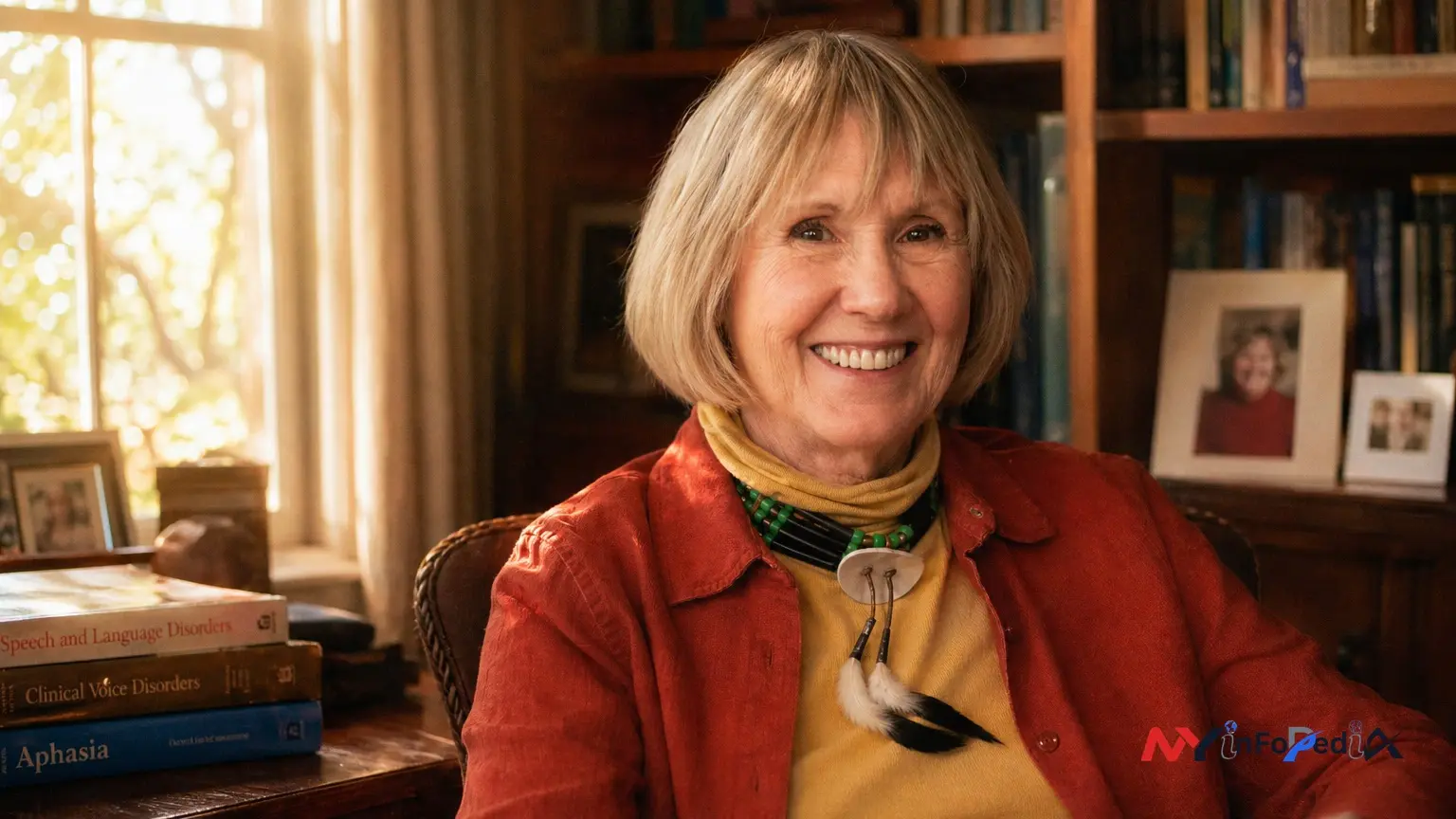
Most biographies orbit around the famous name. In this case, the orbit is reversed. The life of Joanne Schieble Simpson sits in the background of one of the most influential figures in modern history, yet her story carries its own weight. It is not about innovation or billion-dollar companies. It is about pressure, timing, and a single decision that carried consequences far beyond what anyone could have predicted.
This is not a story of fame. It is a study in context, social norms, and human judgment.
Who Was Joanne Schieble Simpson
Joanne Schieble Simpson was born on August 1, 1932, in Green Bay, Wisconsin, United States. She grew up in a conservative Catholic household with strong European roots. Her parents emphasized discipline, education, and reputation. Those values shaped her early worldview in ways that would later create tension in her personal life.
She is widely known as the biological mother of Steve Jobs, but that label alone simplifies a far more complex life. Professionally, she built a career as a speech-language pathologist, a field grounded in communication science and patient care. That choice reflects a consistent theme in her life. She valued education, structure, and long-term outcomes.
Her life was defined less by public recognition and more by private resilience.
Early Life and Social Context
The Environment She Grew Up In
The 1930s and 1940s in America were shaped by the aftermath of the Great Depression and the realities of World War II. Social expectations were rigid, especially for women.
Key cultural factors that influenced her life:
- Strong emphasis on family honor
- Limited autonomy for young women
- Social stigma around relationships outside marriage
- Religion playing a central role in daily decisions
Her family followed strict Catholic traditions. That mattered later, when personal choices began to conflict with those expectations.
A Personality Shaped by Pressure
Joanne was academically inclined and intellectually curious. She pursued higher education at a time when many women did not. That decision alone suggests independence. At the same time, she remained tied to her family’s expectations.
This duality created internal conflict. It becomes important when analyzing her later decisions.
Education and Career Path
Joanne attended the University of Wisconsin–Madison, where she studied speech and language sciences. This was not a casual academic choice.
Speech-language pathology involves:
- Diagnosing communication disorders
- Treating speech and language impairments
- Supporting both children and adults
- Applying structured, evidence-based interventions
Her professional life reflects patience and analytical thinking. These traits also appear in how she handled personal challenges.
Education was not just a milestone in her life. It became a guiding principle.
The Relationship That Changed Everything
Meeting Abdulfattah Jandali
During her university years, she met Abdulfattah Jandali, a graduate student from Syria studying political science.
The relationship introduced multiple layers of complexity:
- Cultural differences
- Religious differences
- Family opposition
- Social judgment
At that time, interfaith and intercultural relationships faced strong resistance in American society.
Family Conflict
Her father strongly opposed the relationship. His objection was not subtle. It carried the implication of estrangement.
This created a classic high-pressure scenario:
| Factor | Impact |
| Family authority | Emotional pressure |
| Cultural norms | Social risk |
| Relationship commitment | Personal conflict |
Joanne was forced into a decision space with no easy outcome.
The Pregnancy and the Critical Decision
In 1954, Joanne became pregnant. This was a turning point.
At that time:
- Unmarried pregnancy carried severe social stigma
- Abortion was largely illegal and unsafe
- Family reputation could be permanently affected
She relocated to California to give birth privately. This decision alone reflects the intensity of social pressure she faced.
Why Adoption Was Chosen
The decision to place her child for adoption was not impulsive. It was structured and conditional.
She insisted on one requirement:
- The adoptive parents must be college educated
This condition highlights her belief system. Education, in her view, was the foundation of opportunity.
However, the eventual adoptive parents, Paul Jobs and Clara Jobs, did not meet that requirement initially. They promised to fund college education for the child.
Only after that assurance did she agree.
This moment is often cited in biographies, including references on Wikipedia and Walter Isaacson’s well-documented biography of Steve Jobs, as a defining condition that shaped Jobs’ upbringing.
Steve Jobs and the Ripple Effect
A Brief Look at His Impact
Steve Jobs went on to co-found Apple Inc. in 1976 alongside Steve Wozniak.
Key innovations linked to his leadership include:
- iPhone
- iPad
- MacBook
- iMac
These products reshaped consumer technology globally.
The Indirect Influence
It would be simplistic to say Joanne directly created this outcome. However, her decision influenced:
- The environment Jobs grew up in
- The emphasis on education
- The stability provided by his adoptive family
In his 2005 Stanford commencement speech, Jobs acknowledged the importance of his adoption and the role education played in his life. This serves as a verifiable real-world reference point.
Life After Adoption
After the adoption, Joanne returned to Wisconsin and continued her education. She later married Abdulfattah Jandali, and they had a daughter, Mona Simpson.
Their marriage ended in divorce in 1962.
She later married George Simpson, which brought a period of stability.
Career and Personal Life
Her professional life continued in speech-language pathology. She worked quietly, without seeking public recognition.
Key characteristics of this phase:
- Focus on career stability
- Raising her children
- Maintaining privacy
- Avoiding public association with her son’s fame
She lived what can be described as a deliberately low-profile life.
Reunion with Steve Jobs
The reunion occurred in the 1980s after Steve Jobs initiated a search for his biological parents.
The outcome was not dramatic in a public sense. It was personal and measured.
Important points:
- Jobs did not express resentment
- Joanne expressed regret and explained her circumstances
- A relationship formed gradually, not instantly
This aligns with multiple documented accounts, including biographical research.
A Life Defined by Restraint, Not Recognition
Joanne Schieble Simpson passed away on January 19, 2018, at the age of 85.
She lived long enough to see:
- The rise of Apple
- The global influence of her biological son
- Cultural shifts in how society views adoption and single motherhood
Yet she remained outside the spotlight.
What Makes Her Story Relevant Today
Her life offers insight into:
- How social pressure shapes personal decisions
- The long-term impact of early life choices
- The role of education in shaping outcomes
- The difference between visibility and influence
It is a reminder that not all pivotal figures are publicly visible.
Key Facts Summary
| Category | Detail |
| Full Name | Joanne Carole Schieble Simpson |
| Birth | August 1, 1932 |
| Death | January 19, 2018 |
| Profession | Speech-language pathologist |
| Known For | Biological mother of Steve Jobs |
| Children | Steve Jobs, Mona Simpson, John Simpson |
| Education | University of Wisconsin–Madison |
FAQs
1. Why did Joanne Schieble give Steve Jobs up for adoption
She faced intense social and family pressure as an unmarried pregnant woman in the 1950s. Adoption was seen as the most viable option that could provide stability and opportunity for the child.
2. Did Steve Jobs have a relationship with his biological mother
Yes. They met as adults in the 1980s. Their relationship developed gradually and remained respectful, though not highly public.
3. What condition did Joanne set for the adoption
She insisted that the adoptive parents be college educated or commit to funding college education for her child. This condition played a significant role in her final decision.
4. What did Joanne Schieble Simpson do professionally
She worked as a speech-language pathologist, helping individuals with communication disorders. It is a clinical and education-focused profession.
5. Is Joanne Schieble Simpson responsible for Steve Jobs’ success
Not directly. However, her decision influenced the environment in which Jobs was raised, particularly the emphasis on education and stability. That indirect impact is widely acknowledged in biographical studies.
Final Reflection
Joanne Schieble Simpson’s story does not rely on dramatic narrative arcs. It is grounded in context, constraint, and consequence.
Her life demonstrates something subtle but important. Decisions made under pressure can still carry intention. And sometimes, those decisions ripple outward in ways that only become visible decades later.
Her influence was not loud. It was structural.
