


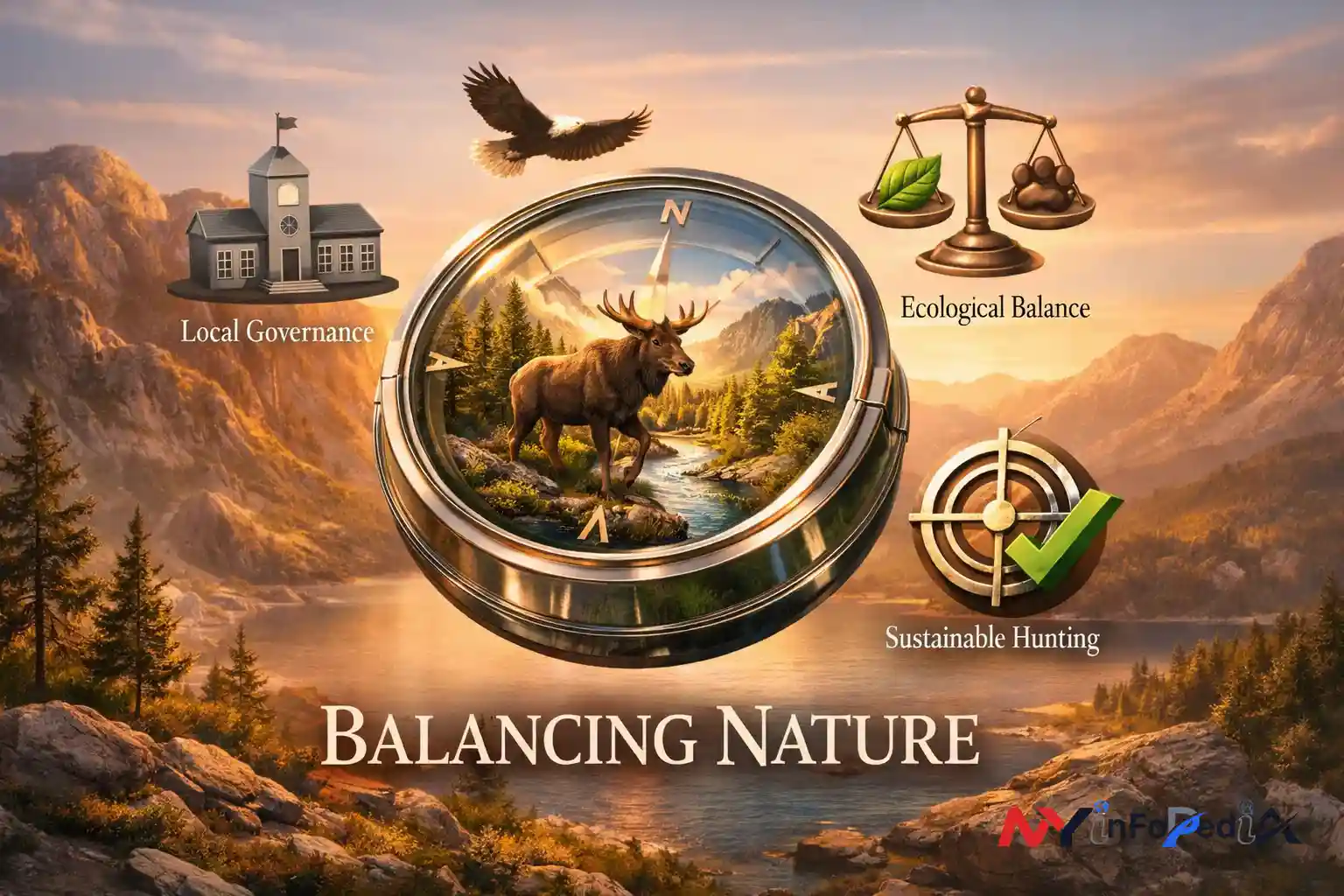
Wildlife management often sounds like a distant policy topic, something handled by governments and scientists far removed from everyday life. In reality, it is deeply local, often shaped by people who live closest to forests, farms, and fragile ecosystems. That is exactly where Viltnemnda comes in.
Viltnemnda represents a distinctly Norwegian approach to managing wildlife, one that blends national law with local decision-making in a way that feels practical rather than bureaucratic. It is not just a system, it is a working relationship between humans and nature that evolves constantly.
Understanding how it works reveals something more interesting than policy. It shows how balance is actively maintained, not passively hoped for.
What Is Viltnemnda and Why It Exists
At its core, Viltnemnda is a municipal wildlife management board. Each Norwegian municipality can establish its own body responsible for managing wild animal populations within its territory.
That simple definition hides a more nuanced reality. These boards operate at the intersection of ecology, law, and community pressure. They are not just rule enforcers. They are decision-makers navigating trade-offs that rarely have perfect answers.
The system exists because centralized control alone cannot respond effectively to local ecological conditions. A coastal region dealing with seabirds faces different challenges than an inland forest managing moose populations. Viltnemnda allows those differences to shape policy.
In practice, this means wildlife management is not uniform across Norway. It is adaptive.
The Historical Shift That Changed Everything
From State Control to Local Responsibility
Before 1993, wildlife management in Norway was largely handled by centralized state bodies. These institutions operated with a broad mandate but often lacked local nuance.
The shift in 1993 changed that structure completely. Responsibility moved from the state to individual municipalities. This was not just administrative decentralization. It was a philosophical shift.
Local communities were no longer just stakeholders. They became decision-makers.
Why This Transition Mattered
Wildlife does not behave according to national borders or policy timelines. Migration patterns, breeding cycles, and habitat pressures vary significantly even within small geographic areas.
By transferring authority to municipalities:
- Decisions became faster and more context-aware
- Policies could reflect real-time local conditions
- Community accountability increased
Some municipalities dissolved formal boards and reassigned responsibilities. Others retained structured wildlife committees, recognizing that the field required specialized knowledge.
This flexibility is one of the system’s defining strengths.
How Viltnemnda Actually Works on the Ground
Structure and Composition
Viltnemnda is typically composed of:
- Local political representatives
- Individuals with ecological or wildlife expertise
- Community members familiar with local land use
This mix is intentional. Purely technical bodies can become detached from public realities, while purely political ones risk ignoring ecological constraints. Viltnemnda tries to sit in between.
Decision-Making Process
Decisions are not made casually. They usually follow a structured sequence:
- Data collection on wildlife populations and habitat conditions
- Assessment of local issues such as crop damage or population imbalance
- Alignment with national laws and conservation goals
- Implementation through regulations or interventions
This process might sound procedural, but it often involves negotiation. A farmer dealing with repeated crop loss does not experience wildlife as an abstract concept. A conservationist does not see population reduction as a neutral action. Viltnemnda operates within that tension.
Core Responsibilities, Beyond the Obvious
Population Management Is More Than Counting Animals
Managing wildlife populations is not just about ensuring numbers stay within a “safe” range. It involves understanding dynamics such as:
- Reproductive rates
- Seasonal migration patterns
- Predator-prey relationships
- Habitat carrying capacity
For example, an increase in moose population might seem positive at first glance. However, if it exceeds what the forest can sustain, it leads to overgrazing, which then affects plant regeneration and other species.
Viltnemnda must think in systems, not just species.
Hunting Regulation as a Precision Tool
Hunting is often misunderstood as either a tradition or a threat. In Norway, it functions as a management mechanism.
Viltnemnda regulates:
- Hunting seasons
- Quotas based on population data
- Permit distribution
The objective is not to maximize hunting activity, but to maintain ecological balance.
A poorly set quota can destabilize an entire local ecosystem. Too high, and populations collapse. Too low, and overpopulation causes habitat damage. The margin for error is narrower than it appears.
Conflict Management Between Humans and Wildlife
Conflicts are inevitable. Wildlife does not recognize property lines.
Common scenarios include:
- Animals damaging crops
- Wildlife entering residential areas
- Road accidents involving large animals
Viltnemnda’s role is to respond quickly and proportionately. Not every situation requires removal of animals. Sometimes it involves deterrence strategies, habitat adjustments, or temporary restrictions.
The goal is not elimination of conflict. It is controlled coexistence.
Wildlife Management in Norway: A System Built on Balance
Norway’s ecosystem is diverse, ranging from dense forests to coastal zones. This diversity demands a management system that is equally flexible.
Viltnemnda contributes to a broader framework where:
- Conservation and resource use are not treated as opposites
- Local knowledge complements scientific data
- Policies evolve with environmental changes
One subtle but important aspect is the integration of local observation. Residents often notice shifts in wildlife behavior before formal studies do. Incorporating that insight makes the system more responsive.
Why Viltnemnda Matters for Biodiversity
Biodiversity is often discussed in global terms, but its preservation happens locally.
Viltnemnda supports biodiversity through:
- Preventing overexploitation of species
- Protecting habitats through indirect regulation
- Supporting restoration initiatives where needed
Consider a scenario where a predator species declines. Prey populations may surge, leading to vegetation damage and long-term ecological imbalance. Managing one species without considering others creates cascading effects.
Viltnemnda’s localized approach helps reduce these blind spots.
The Challenges That Make This Work Difficult
Conflicting Interests Are Built Into the System
Farmers, hunters, conservationists, and residents often want different outcomes. These are not minor disagreements. They can directly impact livelihoods.
Viltnemnda must make decisions that are technically sound and socially acceptable. That balance is rarely perfect.
Climate Change Is Reshaping the Playing Field
Changing temperatures and weather patterns affect:
- Migration routes
- Breeding cycles
- Food availability
A strategy that worked ten years ago may no longer be effective. This forces constant reassessment.
Resource Constraints Limit What Is Possible
Not all municipalities have equal access to:
- Funding
- Research tools
- Expert knowledge
This creates uneven capacity across regions. Some boards operate with high precision, others with limited data.
A Quick Comparison: Norway vs Other Systems
| Aspect | Norway Viltnemnda Model | Typical Centralized Model |
| Decision Level | Municipal | National or State |
| Flexibility | High | Moderate to Low |
| Community Involvement | Direct | Indirect |
| Adaptation Speed | Fast | Slower |
| Local Context Use | Strong | Limited |
The Norwegian model emphasizes proximity to the problem. That proximity improves responsiveness but also increases responsibility.
The Future of Viltnemnda
The system is not static. It is already evolving in several directions.
Technology Is Quietly Changing Operations
Tools like drones, GPS tracking, and data analytics are improving:
- Population monitoring
- Habitat mapping
- Incident response
Better data leads to better decisions, but it also raises expectations.
Public Awareness Is Increasing
As environmental issues become more visible, communities are more engaged. This can be positive, but it also adds pressure on decision-making bodies.
Climate Adaptation Will Become Central
Future strategies will likely focus on:
- Resilient ecosystems
- Flexible hunting regulations
- Proactive conflict prevention
Viltnemnda will need to anticipate changes rather than react to them.
Key Characteristics of the Viltnemnda System
- Local governance integrated with national law
- Focus on balance rather than strict conservation or exploitation
- Continuous adaptation based on real-world conditions
- Direct community involvement in decision-making
These characteristics are simple to list but complex to execute.
Common Misunderstandings About Viltnemnda
Many assume it is only about hunting regulation. That is only one part of its function.
Others believe it prioritizes wildlife over human needs. In reality, it attempts to balance both, which often means neither side is fully satisfied.
There is also a tendency to view it as a static system. It is not. It changes constantly, shaped by environment, policy, and public perception.
Final Thoughts
Viltnemnda does not operate in a perfect system. It operates in a real one, where trade-offs are constant and outcomes are rarely ideal.
At first glance, it may seem like a technical administrative body. Look closer, and it becomes clear that it is something more dynamic. It is a system that continuously negotiates the boundary between human activity and natural systems.
That negotiation never truly ends. And perhaps that is the point.
Because in a world where balance is often discussed but rarely maintained, Viltnemnda shows what it looks like when balance is treated as an ongoing responsibility rather than a fixed state.
FAQs
What does Viltnemnda actually control
It manages local wildlife decisions within the framework of national laws, including hunting regulations, population control, and conflict resolution.
Is it only focused on hunting
No. Hunting is one tool among many. The broader goal is ecosystem balance and sustainable coexistence.
Who makes the decisions
Local representatives, often combining political authority, ecological knowledge, and community input.
Why not manage everything at a national level
Because local conditions vary too much. Centralized systems often miss important regional differences.
Is this model applicable globally
Parts of it can be adapted, especially the emphasis on local decision-making. However, success depends on governance structures and community engagement.
