


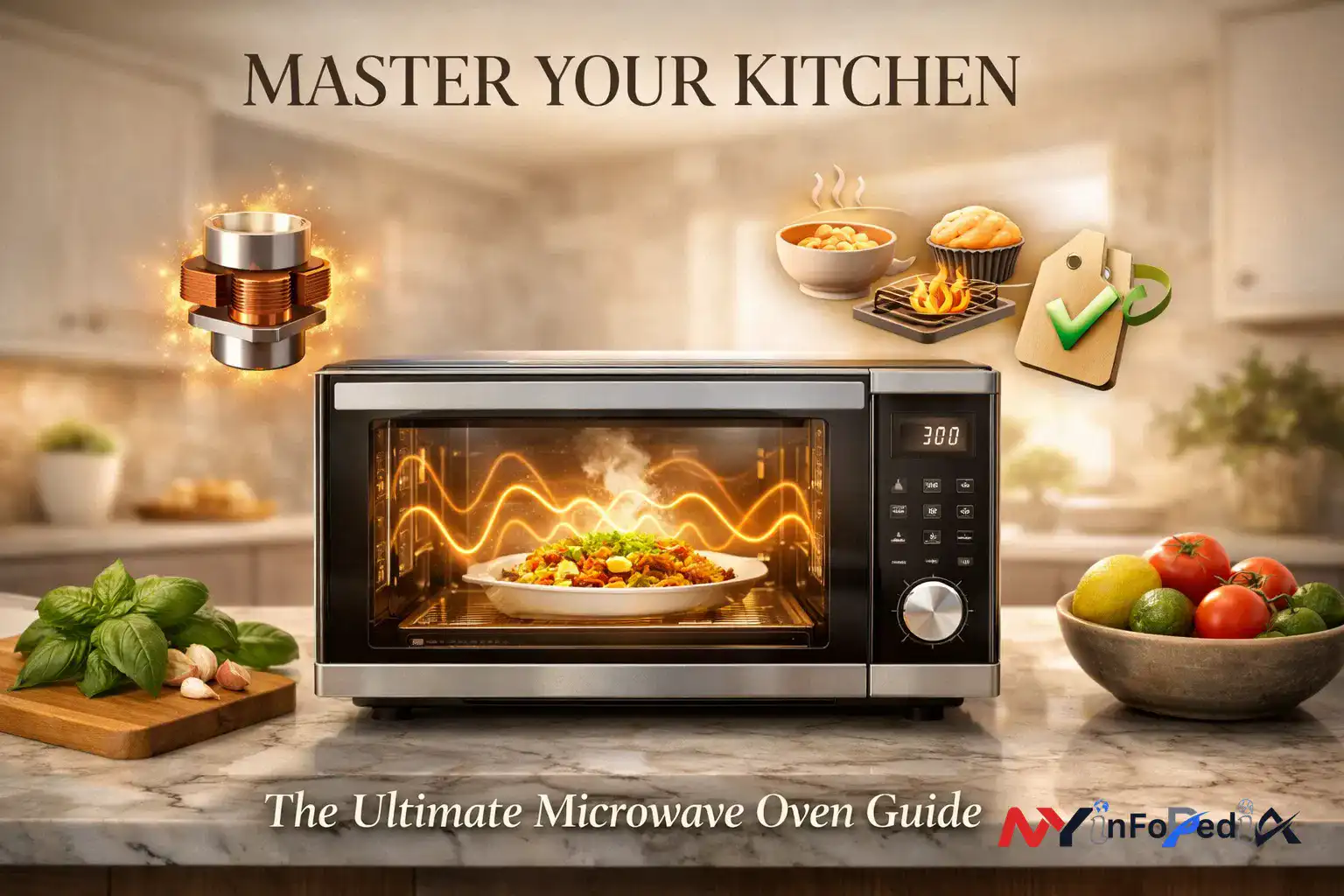
Microwave ovens sit quietly on kitchen counters, yet they rely on some of the most interesting physics used in everyday life. What looks like a simple reheating box is actually a carefully engineered system that uses electromagnetic energy to cook food from the inside in a controlled way. If you have ever wondered why leftovers heat unevenly or why some dishes turn rubbery while others stay perfect, the answers lie in how microwaves interact with food.
This guide breaks everything down in a practical, readable way. It focuses on how microwave ovens actually work, the types available today, their real strengths and limits, and what matters when choosing one.
What Is a Microwave Oven
A microwave oven is an electric appliance that cooks and heats food using electromagnetic waves(microwaves) instead of direct heat. These waves fall in a specific frequency range that interacts strongly with water molecules. In most household microwave ovens, this frequency is standardized at 2.45 gigahertz (GHz), a range chosen because it efficiently excites water molecules while remaining safe for controlled use.
Instead of heating the air around food like a traditional oven, a microwave energizes the molecules inside the food itself. That difference explains both its speed and its quirks.
How a Microwave Oven Works
At the core of every microwave is a component called a magnetron. It generates microwave radiation, which is then directed into the cooking chamber.
The basic process
- The magnetron produces microwaves at a fixed frequency (mostly 2.45 GHz)
- These waves bounce around inside a metal cavity
- Food absorbs the energy, especially water molecules
- Molecules start vibrating rapidly
- This vibration produces heat inside the food through a process called dielectric heating(Conversion of electromagnetic energy to thermal energy)
It sounds simple, but the details matter.
Why water matters so much
Foods with higher water content heat faster. That is why vegetables steam quickly, while dry bread can feel uneven or tough.
Water molecules are polar, meaning they have positive and negative ends. When exposed to alternating electromagnetic fields, they constantly try to realign, creating internal friction and heat. This effect is strongest in substances with high dielectric loss, which is why water-rich foods respond more efficiently to microwave energy than dry materials.
Why heating is not perfectly even
Microwaves do not spread energy uniformly. Inside the cavity, microwaves form standing wave patterns, creating regions of high energy (hot spots) and low energy (cold spots) known as nodes and antinodes
Manufacturers solve this in two common ways:
- Turntables rotate food through different energy zones
- Wave stirrers scatter the microwaves inside the chamber
Still, uneven heating remains one of the most noticeable limitations.
Key Components Inside a Microwave
Understanding the internal structure helps explain both performance and safety.
Main components
- Magnetron: Generates microwave energy
- Waveguide: Directs waves into the chamber
- Metal cavity: Reflects waves to contain energy
- Turntable or stirrer: Improves heating distribution
- Control panel: Manages time, power, and modes
Safety design
Microwave ovens are built like a sealed system:
- The metal body acts as a shield
- The door contains a fine mesh that blocks radiation
- Interlock switches stop operation if the door opens
This is why properly functioning microwaves are safe for daily use.
Types of Microwave Ovens
Not all microwaves behave the same. The type you choose directly affects cooking quality.
1. Solo Microwave
This is the basic version used for reheating and simple cooking.
Best for:
- Heating leftovers
- Boiling liquids
- Defrosting frozen food
Limitations:
- No browning or crisping
- Limited versatility
2. Grill Microwave
Adds heating elements for surface browning.
Best for:
- Grilled sandwiches
- Kebabs
- Light roasting
Limitations:
- Still not a full replacement for an oven
3. Convection Microwave
Combines microwave energy with hot air circulation.
Best for:
- Baking cakes
- Roasting chicken
- Crisping food
This is the closest hybrid between a microwave and a traditional oven.
In practical terms, solo microwaves typically operate in the 700–900 watt range, while grill and convection models often exceed 1000 watts, offering greater cooking flexibility at the cost of slightly higher energy use.
Quick comparison table
| Feature | Solo | Grill | Convection |
| Reheating | Yes | Yes | Yes |
| Grilling | No | Yes | Yes |
| Baking | No | Limited | Yes |
| Speed | Fast | Moderate | Moderate |
| Versatility | Low | Medium | High |
Advantages of Microwave Ovens
Microwaves became popular for a reason. They solve real kitchen problems.
Speed and convenience
- Food heats in minutes
- No preheating required
- Ideal for busy routines
Energy efficiency
- Only food is heated, not the entire oven
- Lower electricity use compared to conventional ovens
Nutrient retention
Shorter cooking time often preserves:
- Vitamins
- Minerals
This is especially true for vegetables.
Easy operation
Modern microwaves offer:
- Auto cook menus
- Defrost modes
- Sensor-based cooking
Limitations You Should Know
Microwaves are not perfect. Knowing their limits helps avoid frustration.
No natural browning
Microwaves rarely reach temperatures, typically above 150–165°C (300–330°F), which are required for browning reactions. needed for:
- Maillard reactions
- Crisp textures
That is why pizza crust stays soft unless reheated creatively.
Uneven heating
- Thick foods heat from outside inward
- Cold spots can remain if not stirred
Texture changes
Some foods behave poorly:
- Bread becomes chewy
- Fried items lose crispness
Limited professional use
Chefs rely on high heat techniques that microwaves cannot replicate effectively.
Common Myths About Microwave Ovens
Myth 1: Microwaves make food radioactive
False. Microwave energy does not alter the atomic structure of food. It only transfers heat.
Myth 2: Food cooks from inside out
Partially incorrect. Microwaves penetrate only a few centimeters. The rest cooks through heat conduction(heat gradually transfers from hotter regions to cooler ones).
Myth 3: Microwaves destroy nutrients
Not entirely true. In many cases, they preserve nutrients better than boiling due to shorter cooking time.
Safety and Practical Usage Tips
Microwaves are safe when used correctly, but small mistakes can cause problems.
Safe usage tips
- Use microwave-safe containers
- Avoid metal utensils or foil
- Do not run the microwave empty
- Clean regularly to prevent residue buildup
Avoid heating sealed containers or whole eggs, as internal pressure can build up and cause sudden rupture or explosion.
Sparks (arcing) can occur if metal or foil is used improperly, potentially damaging the appliance.
Superheated water caution
Water heated too long can explode when disturbed. This is rare but real.
A simple trick:
- Place a spoon or stir stick in the cup before heating
Choosing the Right Microwave Oven
Buying a microwave is less about brand and more about matching your needs.
Key factors to consider
- Capacity
- 20–25 liters for small households
- 25–30 liters for families
- Power rating
- 700–900 watts for basic use
- 1000+ watts for faster cooking
- Features
Look for:
- Inverter technology for even heating
- Auto cook programs
- Defrost settings
- Build quality
- Sturdy door
- Reliable control panel
- Durable interior coating
Smart Usage Tips That Actually Help
Small habits can improve results significantly.
For better heating
- Stir food midway
- Cover dishes to retain moisture
- Cut food into uniform sizes
For better texture
- Use a microwave-safe crisping plate
- Combine microwave and pan heating when needed
For defrosting
- Use low power settings
- Let food rest after defrosting
The Future of Microwave Cooking
Microwave technology is evolving quietly.
Recent trends include:
- Inverter-based precise power control
- Combination cooking with infrared and air frying
- Smart sensors that adjust cooking automatically
Future models may focus more on texture control, which is currently the weakest area.
Conclusion
A microwave oven is not just a reheating device. It is a specialized tool built for speed, efficiency, and convenience. It excels at certain tasks and struggles with others, which is why understanding its behavior makes a noticeable difference in everyday cooking.
Used thoughtfully, it becomes one of the most reliable appliances in a kitchen. Ignore its limitations, and it quickly feels inconsistent. The difference comes down to using it for what it does best, rather than expecting it to behave like a conventional oven.
FAQs
1. What is the price of a microwave oven in Pakistan?
The price of a microwave oven in Pakistan typically ranges from PKR 15,000 to PKR 60,000+, depending on the type, capacity, and features.
- Solo microwaves are the most affordable (PKR 15,000–25,000)
- Grill microwaves fall in the mid-range (PKR 25,000–40,000)
- Convection microwaves are the most expensive (PKR 40,000–60,000+)
Prices also vary based on brand, power rating, and advanced features like inverter technology and auto-cook programs.
2. Which type of microwave oven is best?
The best type of microwave oven depends on your usage needs:
- Solo microwave: Best for basic reheating, defrosting, and simple cooking
- Grill microwave: Suitable for light grilling and browning
- Convection microwave: Best for baking, roasting, and full cooking versatility
For most households, a convection microwave oven offers the best balance of functionality and long-term value.
3. Is a microwave better than an oven?
A microwave is not better than an oven—it serves a different purpose.
- Microwave ovens are faster, energy-efficient, and ideal for reheating, defrosting, and quick cooking
- Conventional ovens are better for baking, roasting, and achieving crispy textures
If you need speed and convenience, a microwave is better. If you need high-temperature cooking and browning, a traditional oven is more suitable.
4. What size microwave is best for a family?
The ideal microwave size depends on household size and cooking needs:
- 20–25 liters: Suitable for individuals or small families (1–2 people)
- 25–30 liters: Ideal for medium families (3–4 people)
- 30+ liters: Best for large families or heavy cooking use
For a typical family of four, a 25–30 liter microwave oven provides enough space for most dishes, including standard dinner plates.
5. How to select a good microwave oven?
To choose a good microwave oven, focus on these key factors:
- Capacity: Match size to your household needs
- Power rating: 800–1000 watts for efficient cooking
- Type: Choose between solo, grill, or convection based on usage
- Features: Look for inverter technology, auto-cook menus, and defrost modes
- Build quality: Ensure a sturdy door, reliable controls, and durable interior
A well-chosen microwave should balance performance, reliability, and practical features, rather than just brand name.
