


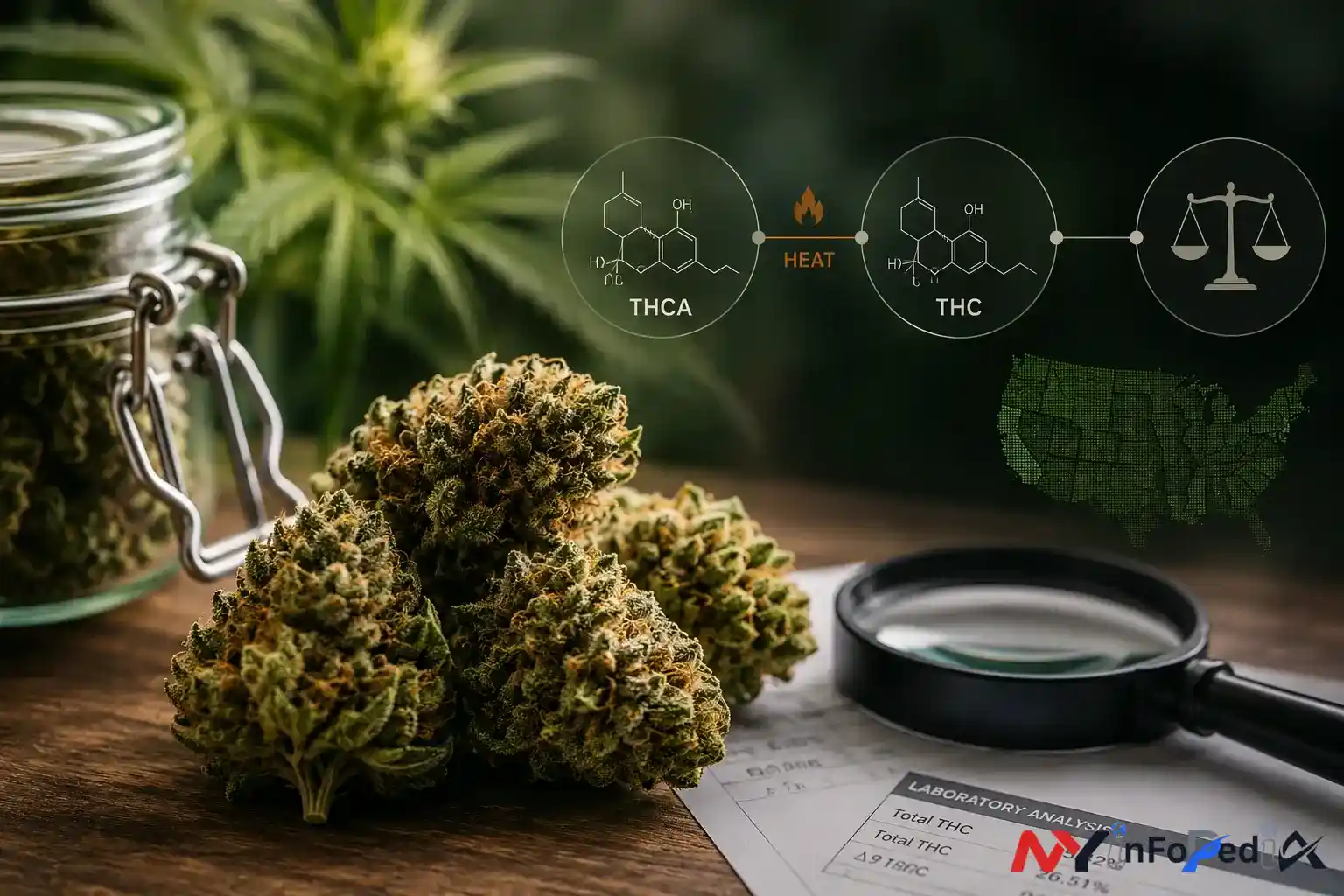
If you have spent any time browsing hemp shops online or walking past a local smoke shop recently, you have probably noticed shelves stacked with something called THCA flower. It looks exactly like marijuana. It smells exactly like marijuana. And once you light it, it behaves exactly like marijuana. Yet somehow it is being sold legally across most of the United States, shipped to doorsteps in states where traditional cannabis remains restricted, and discussed endlessly on cannabis forums with a mix of genuine curiosity and barely contained disbelief.
So what exactly is going on here? Is THCA flower just a legal loophole, or is there something genuinely different and worth understanding? The honest answer is a bit of both, and this guide is going to walk through all of it without the promotional language or confusing chemistry jargon that clutters most articles on this topic.
What Is THCA Flower, Really?
THCA stands for tetrahydrocannabinolic acid. It is the raw, acidic precursor to Delta-9 THC, the compound most people simply call THC when they talk about getting high. In a living cannabis plant, the plant does not actually produce THC directly. It produces THCA first. The conversion from THCA to THC happens when heat enters the picture, through a chemical reaction called decarboxylation.
THCA flower is raw cannabis or hemp flower that has been cultivated and harvested in a way that keeps the Delta-9 THC content below 0.3% by dry weight, which is the federal legal threshold established by the 2018 Farm Bill. Because the plant naturally produces THCA rather than Delta-9 THC, a bud can contain 20% or more THCA while technically remaining under that 0.3% Delta-9 limit. That is the mechanism behind the so-called hemp loophole that has made THCA flower one of the most talked-about products in the cannabis market.
When you smoke or vape THCA flower, the heat triggers decarboxylation instantly. The THCA molecules shed a carbon dioxide molecule and convert into active Delta-9 THC. The psychoactive effects that follow are essentially identical to those from traditional marijuana.
The Chemistry Behind THCA: More Than Just a Precursor
Understanding what THCA actually does before decarboxylation requires a brief look at why its chemical shape matters. THC fits neatly into the CB1 receptors in your brain, the receptors that produce psychoactive effects. THCA, by contrast, has an extra carboxyl group attached to its molecular structure, which changes its three-dimensional shape enough that it does not bind to CB1 receptors in the same way. That is why eating raw THCA flower, say blending it into a smoothie or chewing on a raw bud, will not get you high.
What THCA does interact with in its raw form is more nuanced. Research published in the British Journal of Pharmacology in 2017 found that THCA is a potent agonist of PPARγ, a receptor involved in neuroprotection, with higher potency than its decarboxylated products. A 2023 study published in the International Journal of Molecular Sciences found that both CBDA and THCA showed promise in reducing amyloid-beta and tau pathology in an Alzheimer’s disease mouse model, pointing toward potential cognitive protective effects. These are early-stage findings, not clinical conclusions, and no regulatory body has approved THCA as a treatment for any condition. But they do suggest the molecule has biological activity worth taking seriously.
Research on its anti-inflammatory potential is particularly interesting. A study examining Cannabis sativa extracts found that the anti-inflammatory activity in colon tissue models derived specifically from THCA, suggesting it may interact with the GPR55 receptor rather than the CB1 and CB2 pathways that THC uses. For anyone dealing with inflammatory bowel conditions, this distinction matters, though again, always consult a healthcare professional before treating any medical condition with cannabis-derived products.
THCA Flower vs. Traditional Marijuana: What Is Actually Different?
This is where the conversation gets honest and occasionally awkward. When you light THCA flower, the resulting experience is functionally the same as smoking marijuana. The THC content after decarboxylation can be calculated with a reliable formula: multiply the THCA percentage by 0.877 and add the existing Delta-9 THC percentage. A flower testing at 25% THCA and 0.2% Delta-9 THC would yield roughly 22.1% total THC when smoked. That is well within the range of strong dispensary cannabis.
The differences are more about cultivation context than chemical outcome. Cannabis grown in states with regulated recreational or medical markets is cultivated without the constraint of keeping Delta-9 THC below 0.3%. Growers can let the plant fully mature and express its full cannabinoid and terpene potential without intervention. THCA hemp flower must be managed differently. Some growers harvest slightly earlier to hit compliance targets, and some product undergoes remediation, a post-harvest process that reduces Delta-9 THC concentration. This process can affect the overall terpene profile and cannabinoid richness of the final product.
That said, premium indoor-grown THCA flower from reputable cultivators in regions like Oregon and the Pacific Northwest has genuinely impressed longtime cannabis users. Several Reddit discussions on the topic, drawing from thousands of community responses, show experienced smokers acknowledging that high-quality THCA flower from trusted vendors is competitive with dispensary product in terms of effects, flavor, and potency.
Key Quality Factors to Evaluate Before Buying
Not all THCA flower is created equal, and the market is still maturing. Here is what separates a worthwhile product from one you will regret.
Potency and THCA Percentage
Premium THCA flower typically falls in the 20% to 30% THCA range. Anything substantially below 15% is unlikely to deliver meaningful effects. Always check the listed percentage and verify it against the lab report.
Third-Party Lab Testing and COAs
This is non-negotiable. Every batch of legitimate THCA flower should come with a Certificate of Analysis from an independent, accredited laboratory. The COA should show cannabinoid potency, terpene content, and a panel for contaminants including pesticides, heavy metals, and microbial agents. If a vendor cannot produce an up-to-date COA, move on.
A 2022 report that evaluated 53 hemp samples found that 49 of them contained THCA levels that would technically classify them as marijuana under traditional definitions, which underlines how important verified testing is. You want to know exactly what you are getting, not what a label claims.
Terpene Profile and Cultivation Method
Terpenes give cannabis its distinctive aromas and flavors, and they also contribute to the overall experience through what researchers call the entourage effect, where cannabinoids and terpenes interact to shape the quality of effects. Rich terpene profiles typically indicate careful cultivation, proper curing, and fresh product. Indoor-grown flowers generally preserve terpenes more consistently than outdoor or greenhouse, though excellent sungrown flowers produced from organic soil in favorable climates can compete.
| Cultivation Type | Consistency | Terpene Preservation | Price Range |
| Indoor | High | Excellent | Premium |
| Greenhouse | Medium-High | Good | Mid-range |
| Sungrown/Outdoor | Variable | Good to Excellent (climate-dependent) | Budget to Mid |
| Smalls (Indoor) | High | Good | Value |
Freshness and Visual Appearance
Fresh THCA flower should have dense, well-formed buds covered in visible trichomes. Color should be vibrant, typically green with possible purple, orange, or gold hues depending on strain. Any flower that looks gray, dry, or dull has either been sitting too long or was not cultivated with enough care. If you can assess aroma before purchasing, a full, complex smell is a positive sign. Minimal or flat odor usually means the terpenes have degraded.
Popular THCA Flower Strains Worth Knowing
The strain catalog for THCA flower has expanded significantly. Below are some of the most sought-after options in 2026, along with what they actually deliver.
Blue Dream remains one of the most recognizable cannabis strains available in THCA form. A sativa-dominant hybrid, it is loved for its balanced effects, uplifting mental clarity, and sweet berry aroma. Good for daytime use and creative work.
Lemon Cherry Gelato has built a devoted following for its citrus and cherry flavor profile layered over creamy undertones. It is a balanced hybrid that produces euphoric, mood-enhancing effects and carries impressive terpene density.
Sour Diesel is a classic sativa that has been around for decades for good reason. Strong diesel aroma, energizing effects, and a mood boost that experienced cannabis users recognize immediately. Ideal for daytime productivity.
Wedding Cake is an indica-dominant hybrid derived from Cherry Pie and Girl Scout Cookies genetics. Its sweet, earthy aroma with vanilla notes and deeply relaxing yet occasionally creativity-sparking effects make it a versatile evening strain.
Northern Lights is a pure indica that has earned its legendary status. Cross-bred from Afghani and Thai genetics, it delivers deep physical relaxation and is commonly used for sleep support and managing physical discomfort.
The Legal Reality in 2026: What You Need to Know
The legal status of THCA flower is more complicated than many vendors suggest. At the federal level, hemp-derived THCA flower that meets the 0.3% Delta-9 THC threshold is not scheduled under the Controlled Substances Act. However, the Federal Analogue Act creates a potential legal gray zone, since THCA converts directly to a scheduled substance when heated.
State laws vary considerably. As of June 2025, the 8th Circuit Court of Appeals allowed Arkansas to enforce its ban on hemp-derived THC products including THCA under Act 629. Several other states have moved to restrict or ban smokable hemp products. Tennessee, interestingly, explicitly lists THCA as an allowed hemp-derived cannabinoid, and defense attorneys there have successfully challenged prosecutions based on post-decarboxylation testing methodology.
The practical advice is simple: check your state’s current hemp and cannabis laws before purchasing, because this regulatory landscape is shifting. What is legal to purchase and ship in Oregon today may be treated differently at your local level.
How to Use THCA Flower: Consumption Methods Compared
Smoking
Smoking is the most direct method. Rolling it, packing it into a bowl, or using a water pipe all trigger instant decarboxylation. Effects onset within minutes.
Vaping
Vaping with a dry herb vaporizer heats the flower without combustion, which preserves more terpenes and produces a smoother experience. Many users report the flavor is noticeably better with vapor versus smoke.
Edibles
Edibles require a deliberate decarboxylation step first. Spread ground flower on a baking sheet and heat in an oven at around 220 to 240 degrees Fahrenheit for 30 to 45 minutes before infusing into butter or oil. Skipping this step means your edible will contain mostly unconverted THCA and will not produce psychoactive effects.
Raw Consumption
Blending raw flower into smoothies or juices delivers unconverted THCA. No high, but potential wellness applications related to the anti-inflammatory and neuroprotective properties discussed earlier.
Storing THCA Flower Properly
Proper storage significantly affects how long your flower stays potent and flavorful.
- Use airtight, UV-resistant glass containers such as mason jars.
- Store in a cool, dark location at around 60 to 70 degrees Fahrenheit.
- Avoid the refrigerator, which introduces humidity fluctuations that can encourage mold.
- For long-term storage beyond a few weeks, use Boveda or similar two-way humidity packs to maintain approximately 62% relative humidity.
- Keep away from direct sunlight, which degrades both cannabinoids and terpenes.
Side Effects and Honest Risk Considerations
THCA in its raw, unconverted form can cause mild nausea or digestive discomfort in some people when consumed orally. It can also appear as a positive result on drug tests that screen for THC metabolites, so do not assume raw consumption means testing safe.
Once THCA converts to THC through heat, the side effect profile mirrors traditional cannabis: dry mouth, increased heart rate, temporary memory impairment, anxiety or paranoia particularly at higher doses, and red eyes. People with a history of anxiety-related conditions or psychosis should approach THC-producing products with caution. Heavy, long-term use has been associated with increased risk of cannabis use disorder and, in some research, elevated risk of mental health challenges particularly when high-potency products are used frequently during adolescent development.
None of this is said to discourage responsible adult use. It is said because understanding what you are putting in your body is part of making genuinely informed choices.
Frequently Asked Questions
Does THCA flower get you high?
In its raw form, no. THCA does not bind to the CB1 receptors responsible for psychoactive effects. However, once you apply heat through smoking, vaping, or cooking with proper decarboxylation, THCA converts to Delta-9 THC and the effects are functionally identical to traditional marijuana. Most users report no meaningful difference in the high compared to dispensary cannabis.
Is THCA flower legal in all 50 states?
Not exactly. Under the 2018 Farm Bill, hemp-derived THCA flower meeting the 0.3% Delta-9 THC threshold is federally unscheduled. However, state laws vary significantly. States like Arkansas have moved to restrict these products, and the legal landscape continues to evolve. Idaho prohibits all hemp flower products. Always verify current state law before purchasing.
How is THCA flower different from CBD flower?
CBD flower is hemp cultivated for high cannabidiol content and contains minimal THC or THCA. It produces no psychoactive effects regardless of how you consume it. THCA flower, by contrast, contains high levels of tetrahydrocannabinolic acid that convert to psychoactive THC when heated. They serve completely different purposes, though both are derived from hemp.
Will THCA flower show up on a drug test?
Yes, with high likelihood. Drug tests typically screen for THC metabolites. Even if you consume THCA in raw form without heating it, trace amounts can still trigger a positive result on sensitive tests. If you are subject to workplace drug testing or any form of drug screening, avoid THCA flower products entirely.
What THCA percentage should I look for in quality flower?
Quality THCA flowers generally fall between 20% and 30% THCA. Below 15% is considered on the lower end for noticeable effects. The THCA-to-THC conversion ratio is approximately 0.877, meaning 25% THCA yields roughly 21.9% active THC when smoked. Always verify the percentage against a current, third-party lab Certificate of Analysis rather than relying solely on packaging claims.
What is THCA flower really? Learn how THCA converts to THC, why it’s legal in many states, how strong it is, and how to spot quality flower.
