


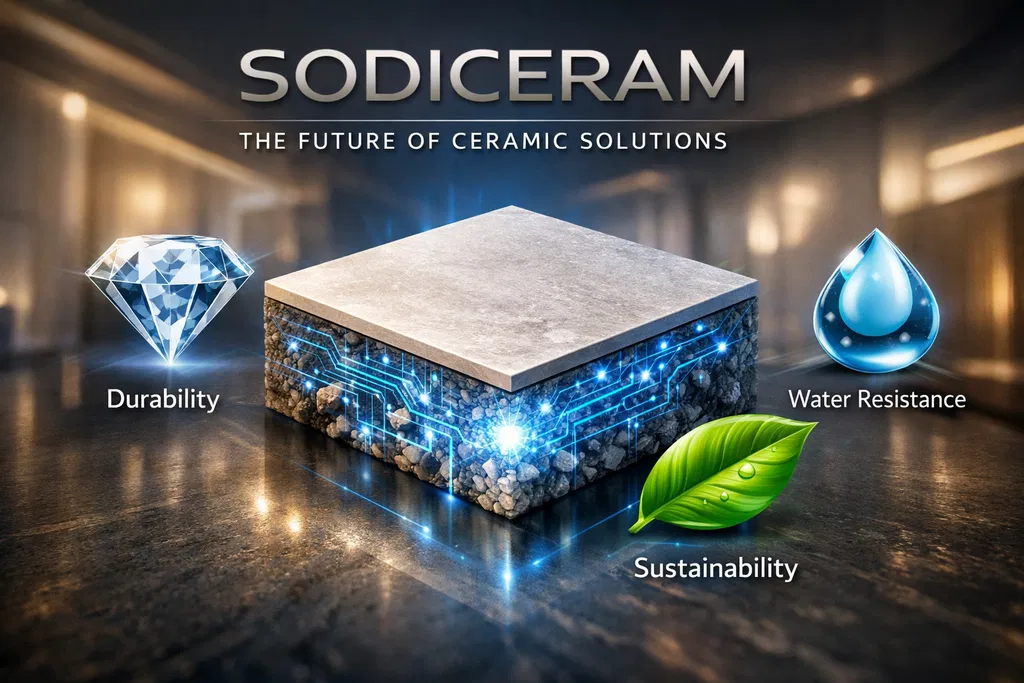
Ever walked into a kitchen after a chaotic family dinner and thought, “How is this floor still spotless?” That quiet moment of relief? It’s probably thanks to something like Sodiceram. I’ll be honest, when I first heard about it, I figured it was just another high-tech tile trying to sound impressive. But after digging into the real science and real-world performance, I’m genuinely hooked. This isn’t your grandma’s ceramic.
Sodiceram is an advanced engineered ceramic material that blends traditional strength with modern material science, making it tougher, greener, and far more versatile than conventional options. Whether you’re renovating a bathroom, designing a commercial lobby, planning exterior cladding, or simply tired of replacing scratched floors every few years, Sodiceram deserves a serious look.
This guide explores Sodiceram from every angle, its role in modern flooring and interiors, its emergence as a high-performance ceramic material in industrial and architectural applications, and the practical details that actually matter when you’re making a decision. If you’re wondering whether it’s worth the investment or just curious why it keeps showing up in forward-thinking projects, you’ll walk away with a clear, grounded understanding.
What Exactly Is Sodiceram?
At its heart, Sodiceram is an engineered ceramic that combines natural minerals, clay, and carefully balanced sodium-based compounds. Unlike standard ceramic tiles made primarily from clay, it uses sodium oxides or silicates as fluxing agents during production. This clever addition lowers the firing temperature in the kiln (often by hundreds of degrees), saves energy, and creates a much denser, less porous final product.
The result is a material that delivers:
- Extreme hardness and scratch resistance
- Minimal water absorption
- Superior chemical stability against stains and acids
- Excellent thermal resistance for temperature swings
- Greater design flexibility for both residential and technical uses
That dual nature, equally at home in a family kitchen or a high-temperature industrial setting, is what makes Sodiceram stand out.
The Science That Makes Sodiceram Stand Out
Let’s geek out for a moment in the most approachable way possible. Traditional ceramics rely on very high firing temperatures, which can leave tiny air pockets and make the material brittle over time. Sodiceram flips the script by introducing sodium compounds that act like a built-in “glue.” During firing, these compounds lower the melting point, allowing particles to bond more tightly at lower heat. The outcome is a denser crystalline structure with fewer microcracks and higher mechanical strength.
Here’s how the manufacturing process actually works:
| Stage | Description | Outcome |
| Raw material preparation | Mixing minerals, clay, and sodium-based compounds | Balanced, consistent composition |
| High-temperature firing | Controlled kiln heating | Dense crystalline structure formation |
| Cooling phase | Precise, gradual cooling | Structural stability and fewer cracks |
| Surface finishing | Polishing, glazing, or texturing | Final aesthetic and performance finish |
This process not only improves durability but also makes production more energy-efficient, one reason Sodiceram is gaining traction among eco-conscious builders. Fun fact: some formulations are already being recycled back into new tiles, closing the loop in a way regular ceramics rarely achieve.
Why Homeowners and Builders Are Switching to Sodiceram
There’s no single reason behind its rise it’s a perfect convergence of real needs. People want materials that look beautiful without constant upkeep. Engineers want surfaces that survive extreme conditions. Sodiceram satisfies both.
Here are the core benefits that actually deliver in everyday life:
- Durability That Holds Up Under Real Stress Whether it’s heavy foot traffic at home or mechanical wear in industrial settings, Sodiceram resists cracking, chipping, and surface wear far better than many alternatives.
- Outstanding Water and Moisture Resistance Its low porosity keeps water from seeping in, making it ideal for bathrooms, kitchens, outdoor areas, and even chemical-exposed industrial environments.
- Aesthetic Flexibility That Feels Premium It can mimic natural stone, wood textures, or sleek modern finishes, all while maintaining top-tier performance.
- Ridiculously Low Maintenance Regular sweeping, mild mopping, and quick spill cleanup are usually all you need. No harsh chemicals required.
- Long Lifespan and Real Cost Savings Properly installed, it easily lasts 20–30+ years. Many homeowners and builders report it pays for itself within 5–7 years through lower upkeep and higher resale value.
One homeowner replaced flood-damaged wood floors with Sodiceram and now jokes that her kids could host a water-balloon fight indoors without panic.
Types of Sodiceram Tiles – Finding the Perfect Match
Not all Sodiceram is the same. The finish you choose affects safety, maintenance, and how the space feels. Here’s a clear breakdown:
| Type | Finish & Feel | Best For | Key Advantage |
| Glazed Sodiceram | Protective glossy layer | Indoor kitchens & bathrooms | Deep color depth, easy cleaning |
| Polished Sodiceram | Smooth, reflective shine | Living rooms, commercial spaces | Luxurious look, light reflection |
| Matte Finish Sodiceram | Subtle, non-slip texture | High-traffic areas, families, wet zones | Extra grip + modern understated vibe |
Each type still delivers the core Sodiceram performance, you’re simply choosing the personality that fits your space.
How to Install Sodiceram the Right Way
Even the best material can underperform with poor installation. Here’s the no-nonsense process:
- Surface Preparation: Clean, dry, and perfectly level the base. Remove all debris and unevenness, even small bumps will show later.
- Tile Placement: Apply high-quality adhesive or mortar evenly. Place tiles with consistent spacing and check alignment carefully.
- Grouting and Sealing: Fill gaps with appropriate grout, then seal to lock out moisture. This step is especially critical in wet areas.
- Final Polishing: Complete the finish for both appearance and protection.
Professional installation is strongly recommended unless you’re very experienced. One small misalignment can affect both looks and long-term durability.
Maintenance Hacks That Keep Sodiceram Looking Fresh for Decades
The beauty of Sodiceram is how little it actually demands:
- Sweep or vacuum daily (or every other day in low-traffic spots).
- Mop with mild detergent, skip bleach and ammonia.
- Wipe up spills immediately, especially acidic ones like wine or lemon juice.
- Check grout lines once or twice a year and refresh sealant as needed.
- Never drag heavy furniture, use felt pads or lift it.
Follow these simple habits and your floors will still look showroom-new long after the warranty expires.
Sodiceram vs. the Competition – The Honest Head-to-Head
Here’s a practical, side-by-side comparison:
| Feature | Sodiceram | Traditional Ceramic | Vinyl | Hardwood |
| Scratch Resistance | Excellent | Good | Fair | Poor |
| Water Resistance | Outstanding | Good | Good | Poor |
| Maintenance | Very low | Low | Low | High |
| Lifespan | 20–30+ years | 10–20 years | 10–15 years | 15–30 years (with care) |
| Eco-Friendliness | High (lower energy production) | Moderate | Lower | Varies |
| Aesthetic Flexibility | High | Moderate | Moderate | Natural only |
Sodiceram clearly wins where durability, moisture resistance, and long-term value matter most.
Industrial and Architectural Applications
Sodiceram isn’t limited to homes. Its technical performance makes it a go-to in demanding environments:
- Construction & Architecture: Exterior cladding, wall panels, decorative surfaces, and high-performance flooring.
- Industrial Settings: Kiln components, chemical-resistant surfaces, heat-resistant parts, and protective coatings.
- Advanced Engineering: Laboratory equipment, insulation materials, and ceramic composites.
This versatility shows why architects and engineers are increasingly specifying it for large-scale projects.
Sustainability: The Green Side of Sodiceram You’ll Love
In 2026, this matters more than ever. Sodiceram’s lower firing temperatures reduce energy use and CO₂ emissions during manufacturing. Many lines incorporate recycled content and are themselves recyclable. Builders pursuing LEED certification appreciate its durability, low VOCs, and responsible sourcing.
Of course, it’s not perfect, production still requires industrial energy, and recycling infrastructure varies by region. But overall, its long lifespan dramatically reduces replacement waste, making it a meaningful step forward compared with shorter-lived materials.
Common Pitfalls (And How to Dodge Them)
Even excellent materials can disappoint if mishandled. Avoid these frequent issues:
- Skipping proper surface preparation.
- Using harsh cleaning chemicals that dull the finish.
- Ignoring thermal expansion in large installations.
- Attempting complex DIY installs without the right tools or experience.
- Failing to follow manufacturer instructions for grout and sealant.
Get these details right and you’ll enjoy Sodiceram for decades.
Future Trends in Sodiceram Technology
The innovation isn’t stopping. Researchers are already developing “smart” Sodiceram with responsive coatings that react to temperature, integrated sensor technology, self-cleaning surfaces, and even more eco-efficient production methods. As cities push for greener buildings and homeowners demand longer-lasting solutions, this sodium-enhanced ceramic is positioned to become a cornerstone in architecture, interior design, and advanced manufacturing.
Practical Use Case
Picture a busy commercial building with constant foot traffic, temperature fluctuations, and occasional moisture exposure. Traditional flooring might degrade quickly. Sodiceram delivers consistent structural integrity, minimal maintenance, and impressive long-term cost savings, exactly why it’s being chosen for high-stakes projects.
Final Thoughts: Is Sodiceram Worth It?
Sodiceram represents a genuine shift toward materials that combine real durability, stunning design flexibility, low maintenance, and meaningful sustainability, all without forcing you to compromise. It’s not the cheapest option upfront, and it rewards proper installation, but over time its reliability and performance often make it the smartest investment.
If your goal is something that looks beautiful today and still performs brilliantly years from now, Sodiceram is worth serious consideration. Get samples, talk to a certified installer, and see it in person, the photos don’t fully capture how good it feels underfoot.
Ready to transform your space? Explore certified Sodiceram options through reputable suppliers and let your future self (and your wallet) thank you later.
FAQs
What makes Sodiceram different from regular ceramic tiles?
It uses engineered sodium-based compounds that create a denser, stronger, more heat- and moisture-resistant material with fewer microcracks.
How long does Sodiceram flooring last?
Typically 20–30 years or more with proper installation and basic care, often outliving the home or building it’s installed in.
Is Sodiceram suitable for wet areas like bathrooms and kitchens?
Absolutely. Its extremely low water absorption makes it one of the best choices for moisture-prone spaces.
Can Sodiceram be used outdoors?
Yes, especially matte or textured variants that provide better grip and weather resistance.
Is professional installation necessary?
It is strongly recommended to ensure perfect alignment, long-term durability, and full performance.
Is Sodiceram eco-friendly?
Very. Lower production energy, recyclable content, and exceptional lifespan mean significantly less waste over time.
There you have it, Sodiceram in a well-engineered nutshell. Got questions about your specific project? Drop them in the comments, happy to help you choose the perfect finish.
