


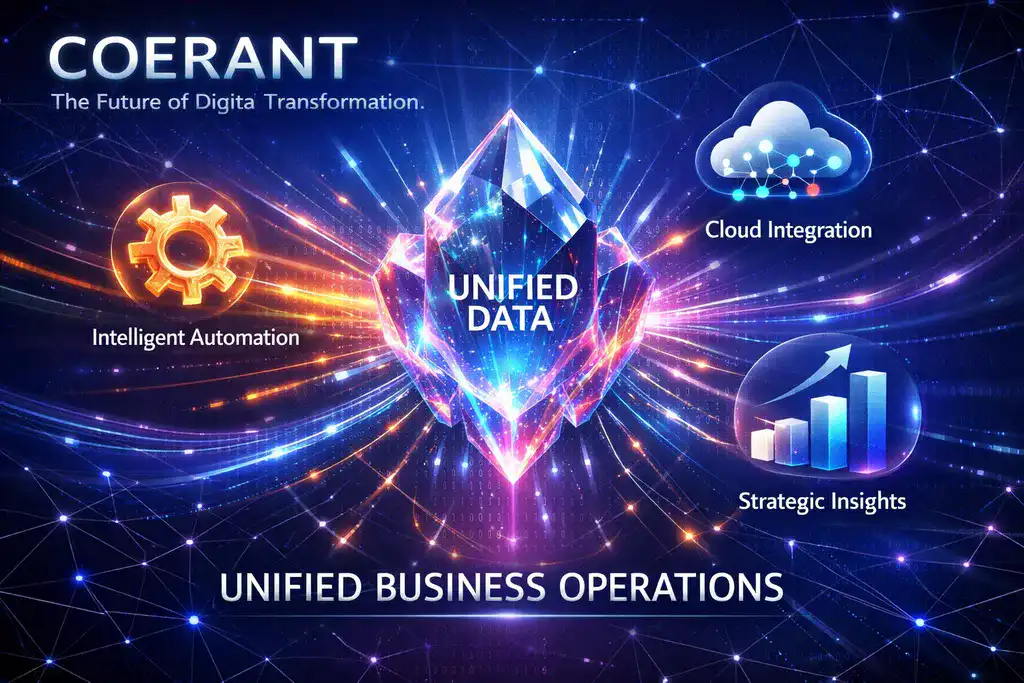
Most businesses do not fail because they lack ideas. They struggle because their systems cannot keep up. Data sits in silos, teams rely on disconnected tools, and decision-making feels slower than it should. This gap between ambition and execution is where conceptual models like Coerant step in.
Coerant is not just another tech solution trying to sound impressive. It connects systems, automates processes, and turns scattered data into something actually useful. The appeal is simple. Businesses want clarity, speed, and smarter operations without drowning in technical chaos.
This article breaks down what Coerant really is, how it works, and why it is gaining attention across industries. One thing to consider is that Coerant is not a widely recognized standalone product or vendor platform. Instead, it is used here as a conceptual framework to explain how modern digital transformation systems integrate automation, data, and decision-making into a unified structure. Along the way, you will see where it fits, where it struggles, and whether it is something businesses genuinely need or just another trend with a shiny label.
What Is Coerant
Coerant is a conceptual digital transformation framework used to describe integrated, self-optimizing business systems and to help organizations streamline operations using technologies like artificial intelligence, cloud computing, and data analytics.
Instead of offering isolated tools, it creates an integrated system where everything works together. Think of it less as software and more as a structured digital ecosystem.
Simple Definition
Coerant is a model that connects business systems, automates workflows, and uses data to improve decision-making.
Core Idea Behind Coerant
The name itself reflects coherence, meaning structured and connected systems. That idea shows up in how the framework operates. It focuses on:
- Bringing disconnected tools into one system
- Simplifying workflows across departments
- Making data usable instead of overwhelming
- Enabling faster and more informed decisions
In practice, similar capabilities can be seen in enterprise platforms like Salesforce, SAP, or cloud ecosystems such as Microsoft Azure, where integration and automation are central to operations.
Why Businesses Are Turning to Coerant
Digital transformation is no longer optional. It has quietly become the baseline for staying competitive.
Key Challenges Businesses Face
- Data overload with no clear insights
- Manual processes slowing down operations
- Fragmented systems that do not communicate
- Increasing customer expectations
- Difficulty scaling operations efficiently
Coerant addresses these issues by reducing complexity rather than adding to it.
What Makes It Relevant Today
The shift toward remote work, real-time analytics, and automation has created a need for frameworks that can unify operations. Coerant fits into this space by offering a practical, system-level solution instead of isolated upgrades.
Core Technologies Behind Coerant
Coerant is not built on a single technology. It combines several systems that work together.
Artificial Intelligence and Machine Learning
AI helps analyze large datasets and identify patterns that humans might miss. Machine learning improves accuracy over time.
Use cases include:
- Predicting customer behavior
- Identifying trends in sales data
- Automating decision-making processes
Cloud Computing
Cloud infrastructure allows businesses to access systems and data from anywhere.
Benefits include:
- Scalability without heavy infrastructure costs
- Real-time collaboration
- Faster deployment of tools
Data Analytics
Data analytics transforms raw information into insights.
Key functions:
- Performance tracking
- Customer behavior analysis
- Business forecasting
Automation Tools
Automation reduces repetitive work and improves efficiency.
Examples:
- Workflow automation
- Automated reporting
- Customer response systems
These technologies are typically implemented through APIs, microservices architectures, and cloud-native infrastructure, allowing different systems to communicate and evolve without requiring complete system replacement.
Core Pillars of Coerant
Coerant provides a combination of Ideas; a framework rather than just a single solution.
Custom Software Development
Businesses often rely on generic tools that do not fit their needs. Organizations applying the Coerant model often develop tailored software aligned with specific workflows.
Common solutions include:
- Inventory management systems
- Internal workflow platforms
- Customer engagement tools
AI-Powered Analytics
This service focuses on turning data into actionable insights.
Capabilities include:
- Market trend analysis
- Customer segmentation
- Predictive modeling
Cloud Solutions
Coerant approach helps businesses migrate and manage systems in the cloud.
Key features:
- Secure data storage
- Remote accessibility
- Scalable infrastructure
Data Management Systems
Centralized data systems allow businesses to monitor operations in real time.
Outputs include:
- Dashboards
- Performance metrics
- Automated reports
Cybersecurity Integration
Security is built into the system rather than added later.
Measures include:
- Data encryption
- Secure authentication
- Threat monitoring
How Coerant Works in Practice
Understanding the workflow makes the framework easier to evaluate.
Step-by-Step Process
- Data Collection
Information is gathered from multiple sources such as websites, CRM systems, and internal tools - Data Analysis
AI models process the data to identify patterns and insights - Automation
Repetitive tasks are automated to improve efficiency - Integration
Systems across departments are connected into a unified structure - Continuous Optimization
The model learns and improves over time
Example scenario:
A retail company integrates its website, inventory system, and customer database. When a product demand spike is detected, the system automatically adjusts inventory orders, updates pricing, and alerts logistics teams, all without manual coordination.
Key Features That Define Coerant
- Personalization
Every solution is tailored to the business rather than using a one-size-fits-all model. - Scalability
Systems grow with the business without requiring complete replacement. - Real-Time Insights
Data is processed instantly, allowing faster decision-making. - Integration Capability
Existing tools can be connected instead of replaced entirely. - User-Friendly Design
Interfaces are designed to reduce complexity rather than increase it.
Real-World Applications Across Industries
Coerant is not limited to one sector. Its flexibility allows it to adapt across industries.
Healthcare
- Patient data management
- Treatment optimization
- Operational efficiency
Retail
- Inventory tracking
- Customer behavior analysis
- Pricing optimization
Finance
- Fraud detection
- Risk analysis
- Data security
Logistics
- Shipment tracking
- Route optimization
- Delivery efficiency
Education
- Learning management systems
- Administrative automation
- Student data analysis
Benefits of Using Coerant
- Operational Efficiency
Automation reduces manual work and speeds up processes. - Better Decision-Making
Data-driven insights reduce guesswork. - Cost Optimization
Efficient systems reduce wasted resources. - Improved Customer Experience
Faster responses and personalized services improve satisfaction. - Competitive Advantage
Businesses can adapt quickly to market changes.
Pros and Cons of Coerant
Pros
- Strong integration across systems
- Scalable for growing businesses
- Reduces operational complexity
- Improves data utilization
- Supports automation and AI-driven insights
Cons
- Implementation can be complex
- Requires training for teams
- Initial cost may be high for small businesses
- Depends heavily on data quality
Most limitations are not caused by the platform itself, but by how organizations implement and adapt to integrated systems.
Challenges Businesses Should Consider
Implementation Complexity
Integrating new systems with existing workflows takes time and planning.
Learning Curve
Employees need time to adapt to new tools.
Data Dependency
Poor data quality leads to poor results.
Cost Factors
Advanced features may require higher investment.
Future of Coerant and Digital Transformation
The future direction of Coerant aligns with broader technological trends.
Emerging Technologies It May Leverage
- Advanced AI models for deeper automation
- Blockchain for secure data transactions
- Quantum computing for complex processing
- Ethical AI frameworks for responsible usage
Market Direction
Demand for integrated digital platforms will continue to grow as businesses move toward automation and data-driven strategies.
Coerant is positioned to evolve alongside these changes, provided it continues adapting to real business needs rather than just adding features.
How Businesses Can Get Started with Coerant
Adoption usually follows a structured process.
Typical Onboarding Steps
- Initial consultation to understand business needs
- System analysis and gap identification
- Custom solution design
- Implementation and integration
- Continuous monitoring and optimization
This phased approach reduces disruption and ensures smoother adoption.
Conclusion
Coerant represents a shift in how businesses approach technology. Instead of stacking tools on top of each other, it focuses on building a connected system where everything works together.
That shift matters more than it sounds. When systems are aligned, decisions become faster, teams become more productive, and operations feel less chaotic. It is not magic, and it is not effortless, but it is practical.
For businesses dealing with complexity, scattered data, and inefficient workflows, Coerant offers a structured way forward. The real value lies not in the technology itself, but in how effectively it simplifies what used to feel complicated.
And in a digital world where complexity keeps growing, simplicity is starting to look like a competitive advantage.
