


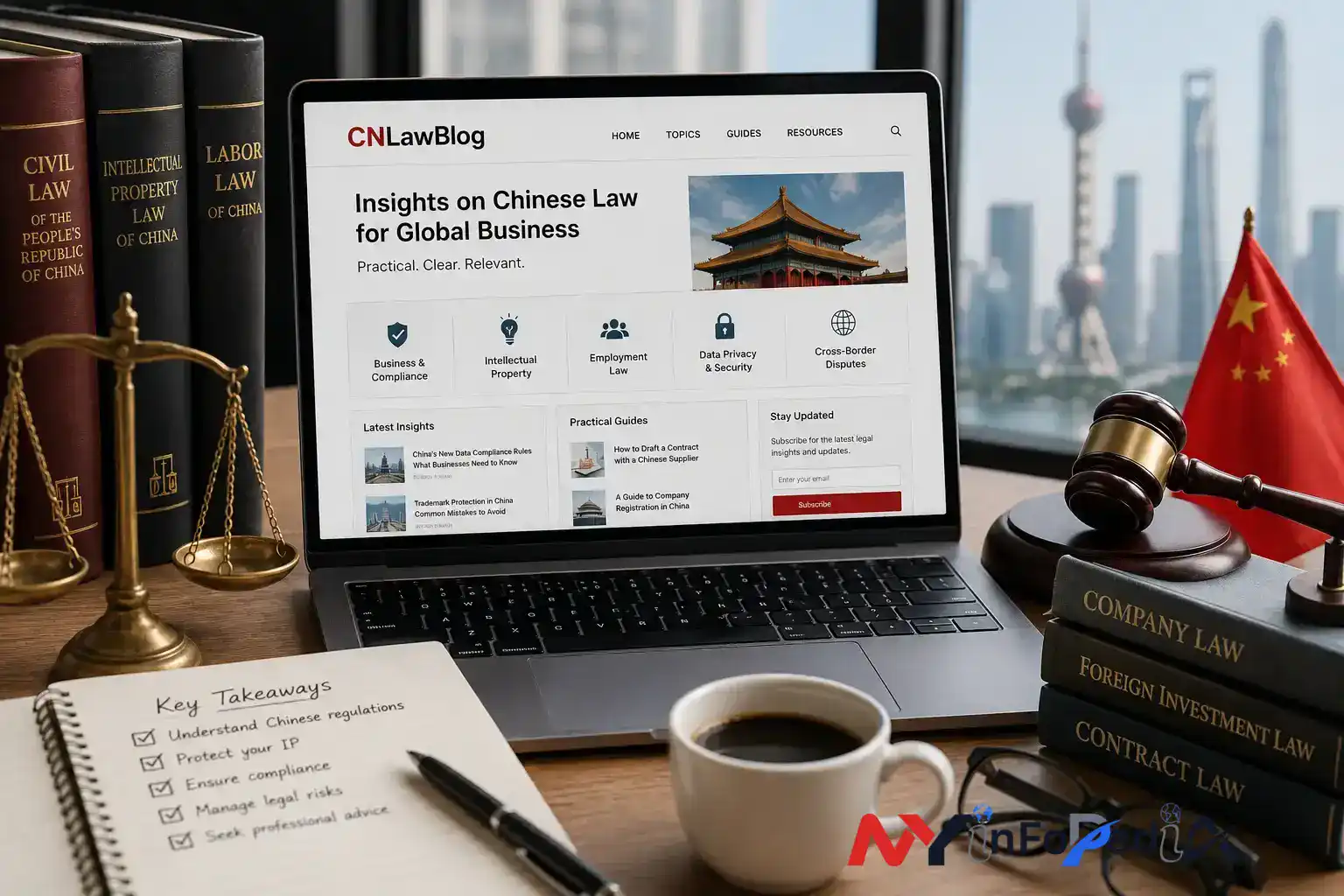
The internet is full of websites promising expert legal guidance. Some are run by respected law firms. Others are little more than content farms stuffed with vague advice and recycled information. Somewhere in the middle sits CNLawBlog, a name that has recently gained attention among students, business owners, researchers, and people curious about Chinese law.
At first glance, the platform looks useful. It covers Chinese legal topics, compliance rules, intellectual property, employment law, business regulations, and even cross-border disputes. But many users still ask the same question before trusting it.
Is CNLawBlog actually reliable?
The answer is more nuanced than a simple yes or no. The platform does provide useful legal education content, especially for beginners. At the same time, it has limitations that serious professionals should understand before relying on it for major legal decisions.
This guide takes a practical, research-driven look at CNLawBlog, how it works, what it does well, where it falls short, and whether it deserves a place among trustworthy legal information resources.
What Is CNLawBlog?
CNLawBlog is an online legal information platform focused heavily on Chinese law, international business regulations, compliance, and practical legal guidance for companies dealing with China.
The blog presents legal topics in simplified language. Instead of drowning readers in dense legal terminology, it tries to explain complicated regulations through real-world examples, short guides, commentary, and practical insights.
Many articles revolve around issues such as:
- Chinese manufacturing contracts
- Intellectual property protection
- Trade secret laws
- Data privacy compliance
- Employment regulations
- Cross-border disputes
- Foreign investment in China
- Export controls
- Supply chain regulations
The platform appears designed primarily for:
| Audience Type | Why They Use CNLawBlog |
| Small business owners | Understanding Chinese business regulations |
| Students | Learning legal basics in simple language |
| Entrepreneurs | Researching compliance and contracts |
| Researchers | Exploring modern Chinese legal developments |
| Foreign companies | Understanding operational risks in China |
One reason for its popularity is accessibility. Legal writing often feels intentionally difficult. CNLawBlog attempts the opposite approach. Some readers appreciate that immediately. Others remain skeptical because simplified law can sometimes oversimplify important details.
That concern is not entirely unreasonable.
Why Chinese Law Has Become a Major Global Topic
Ten years ago, many small companies barely thought about Chinese legal systems unless they directly imported products. Today things are very different.
Modern supply chains connect businesses globally. A startup in London may manufacture in Shenzhen. An Amazon seller in Canada might rely on Chinese factories. A software company in Germany could process user data involving Chinese cybersecurity regulations.
Suddenly, Chinese law matters far beyond China itself.
Recent developments have increased global interest dramatically:
Key Legal Areas Drawing International Attention
Data and Privacy Laws
China’s Personal Information Protection Law, often compared to Europe’s GDPR, changed how foreign businesses handle Chinese consumer data.
Supply Chain Security Rules
China introduced stronger supply chain oversight rules tied to national security concerns in 2026. These regulations affected foreign manufacturers and technology firms operating in or sourcing from China.
Intellectual Property Protection
Trademark disputes and manufacturing copycat problems remain major concerns for global companies.
A surprisingly common mistake still happens today. Small businesses begin manufacturing products in China without registering trademarks locally. Months later, they discover somebody else registered the brand name first.
That scenario is not theoretical. International law firms including Harris Sliwoski LLP have repeatedly discussed similar real-world cases through the China Law Blog.
Is CNLawBlog a Real Legal Resource?
Yes, CNLawBlog appears to be a legitimate informational platform rather than a scam operation.
There is no widespread evidence suggesting fraudulent activity, malware distribution, payment abuse, or intentional misinformation campaigns. Most reviews describe it as an educational legal blog rather than a deceptive website.
However, legitimacy and authority are not identical concepts.
That distinction matters.
A legitimate blog can still have weaknesses involving expertise verification, sourcing quality, citations, transparency, or legal depth.
What CNLawBlog Does Well
1. Makes Legal Concepts Understandable
This is arguably the platform’s biggest strength.
Many legal resources are written almost exclusively for lawyers. CNLawBlog targets ordinary readers. Topics like compliance, contracts, and intellectual property are explained using direct language rather than academic jargon.
For beginners, this matters enormously.
2. Covers Practical Business Problems
A lot of content focuses on situations companies actually face:
- Supplier disputes
- Trademark theft
- Manufacturing agreements
- Employment obligations
- China market entry
- Data compliance
The practical angle gives the content more usefulness than purely theoretical legal commentary.
3. Follows Emerging Chinese Regulatory Trends
Chinese regulations evolve quickly. CNLawBlog frequently discusses newer developments in:
- Export control regulations
- Cybersecurity rules
- Foreign investment oversight
- Supply chain security
- Cross-border data transfers
This makes it more current than many static legal education websites.
Where CNLawBlog Falls Short
No legal blog should be treated as flawless, especially in a field as complex as international law.
Here are the main limitations readers should understand.
Anonymous or Unclear Authors
One common criticism involves transparency.
Some articles lack clearly verified author identities or detailed professional credentials. Readers may not always know whether content was written by:
- Licensed lawyers
- Researchers
- Editors
- Contributors
- General content writers
That uncertainty lowers perceived authority compared to established legal publications.
Limited Citations
Certain articles simplify legal concepts effectively but fail to cite:
- Court decisions
- Statutes
- Official regulations
- Government publications
For casual readers this may not matter much. For professionals, it absolutely does.
Reliable legal analysis depends heavily on verifiable sources.
Surface-Level Coverage in Some Topics
CNLawBlog is generally stronger at introductory guidance than advanced legal analysis.
| Topic | CNLawBlog Style |
| Trademark basics | Beginner-friendly |
| Cross-border litigation strategy | Often simplified |
| Corporate compliance | Moderately detailed |
| Advanced case law analysis | Usually limited |
This does not make the content wrong. It simply defines its audience more clearly.
How It Compares to Established Legal Platforms
The strongest comparison is often made between CNLawBlog and the well-known China Law Blog published by Harris Sliwoski LLP.
Here is the practical difference.
| Feature | CNLawBlog | China Law Blog |
| Reading difficulty | Easy | Moderate to advanced |
| Legal depth | Medium | High |
| Verified legal experts | Limited visibility | Clearly established |
| Real case analysis | Moderate | Extensive |
| Business practicality | Strong | Very strong |
| Beginner accessibility | Excellent | Moderate |
| Formal citations | Limited | Frequent |
In simple terms, CNLawBlog works better as an educational entry point. China Law Blog functions more like a professional-grade legal analysis resource.
Both serve different audiences.
Why Beginners Often Prefer CNLawBlog
Ironically, legal expertise can sometimes make educational content harder to understand.
A law professor may write a technically brilliant article that ordinary readers cannot realistically follow. CNLawBlog succeeds partly because it avoids that trap.
Its structure tends to favor:
- Short explanations
- Simplified examples
- Clear summaries
- Practical checklists
- Business-focused scenarios
For entrepreneurs exploring Chinese markets for the first time, that format feels approachable instead of intimidating.
And honestly, most people searching online for legal basics are not preparing Supreme Court arguments. They just want understandable answers.
Can You Trust Legal Advice from Blogs?
This is where caution becomes important.
No legal blog, including CNLawBlog, should replace professional legal counsel for serious matters.
That includes situations involving:
- International disputes
- Corporate structuring
- Major contracts
- Employment litigation
- Intellectual property conflicts
- Government investigations
- Regulatory violations
Laws change constantly. Jurisdiction matters. Context matters even more.
Even highly respected publications usually include disclaimers stating their content is informational only.
A practical rule works well here:
| Use Blogs For | Avoid Using Blogs For |
| Learning basics | Final legal decisions |
| Research starting points | Litigation strategy |
| Understanding terminology | Compliance certification |
| Following trends | Formal legal representation |
Real-World Example: Why Chinese Trademark Law Matters
A well-known issue in international manufacturing involves trademark registration timing.
Many foreign businesses mistakenly assume they own their brand automatically because they registered it domestically. China largely operates on a first-to-file trademark system.
That means someone else may legally register your brand name in China before you do.
This has happened repeatedly across industries including fashion, electronics, and consumer products.
Major legal resources including the World Intellectual Property Organization and numerous international law firms have documented similar disputes over the years.
CNLawBlog often discusses these practical business risks in simplified form, which is one reason business readers find the platform useful.
Best Ways to Use CNLawBlog Safely
If you plan to use the platform for research, a smart approach helps.
Practical Safety Checklist
- Check publication dates carefully
- Cross-reference major claims with official sources
- Verify legal updates through government websites
- Avoid relying on a single article
- Consult licensed lawyers for serious issues
- Use blogs as educational tools, not legal substitutes
This approach dramatically reduces misinformation risks.
The Future of Legal Blogs Like CNLawBlog
Legal information online is evolving quickly.
Traditional law firms once dominated legal education. Today independent blogs, AI-assisted research platforms, compliance tools, and simplified legal guides are expanding rapidly.
That trend will likely continue because users increasingly prefer:
- Faster explanations
- Practical summaries
- Mobile-friendly research
- Simplified legal language
- Action-oriented guidance
Still, authority and trust will matter even more moving forward.
Readers are becoming better at spotting weak sourcing, vague expertise, and recycled content. Legal blogs that combine accessibility with transparency will likely survive long term.
Frequently Asked Questions
What is CNLawBlog?
CNLawBlog is an online legal information platform covering Chinese law, business regulations, compliance topics, intellectual property, and cross-border legal issues in simplified language.
Is CNLawBlog trustworthy?
It appears to be a legitimate educational resource, but it should not replace professional legal advice. Some articles lack detailed citations and verified author transparency.
Does CNLawBlog provide official legal advice?
No. The platform functions mainly as an informational blog. Serious legal matters should always be handled by licensed legal professionals.
Why do businesses research Chinese law more today?
Global manufacturing, international trade, data privacy regulations, and supply chain rules increasingly require businesses to understand Chinese legal frameworks.
Is CNLawBlog useful for beginners?
Yes. The blog is especially useful for readers who want understandable introductions to complicated legal topics without dense legal terminology.
Final Thoughts
CNLawBlog occupies an interesting space in the modern legal content ecosystem.
It is not a full replacement for professional legal counsel. It is not the deepest legal analysis platform available online either. But that does not automatically reduce its value.
For beginners, entrepreneurs, students, and curious readers trying to understand Chinese legal systems without drowning in technical language, the platform can genuinely help.
Its biggest strength is clarity.
Its biggest weakness is authority transparency.
Used carefully, alongside official legal sources and professional advice where necessary, CNLawBlog can serve as a useful educational starting point for navigating complex legal topics connected to China and international business.w
