


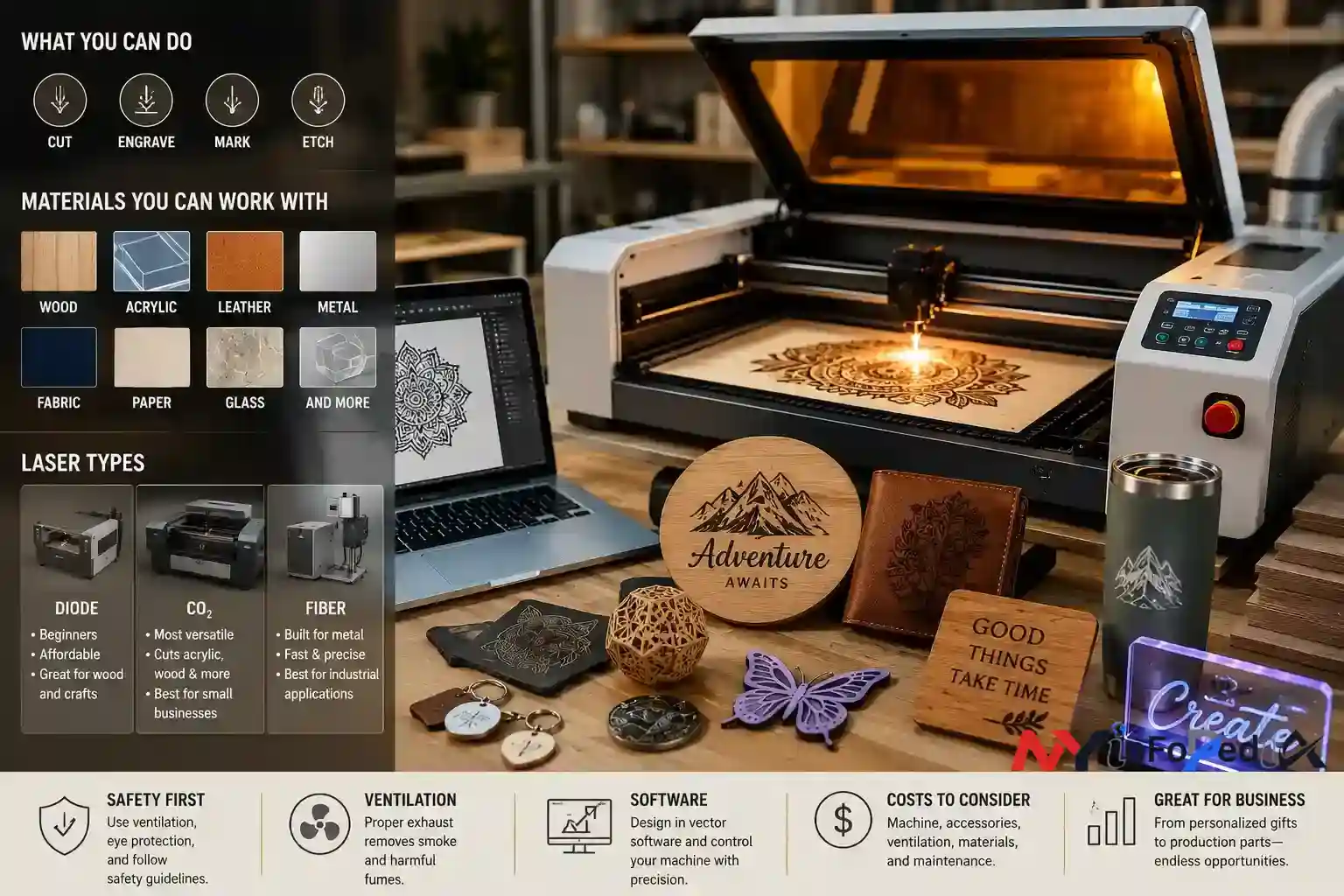
Laser cutters used to feel like industrial machines hidden inside giant factories. Now they sit on garage workbenches, small Etsy studios, school labs, and even spare bedrooms next to coffee mugs and tangled USB cables. That shift happened fast.
A modern laser cutter can engrave leather wallets in the morning, cut acrylic signage in the afternoon, and help prototype a product idea before dinner. For many creators and small businesses, it has quietly become one of the most versatile manufacturing tools available.
Still, buying or using a laser cutter is not as simple as watching satisfying TikTok videos of wood burning in slow motion. Different laser types behave differently. Some machines excel at wood engraving while others are built for industrial metal cutting. Some are beginner friendly. Others can empty your wallet and test your patience in equal measure.
This guide explains how laser cutters work, the differences between CO2, diode, and fiber systems, what materials they can handle, safety concerns, software choices, pricing, and how to choose the right laser cutter machine for your needs in 2026.
What Is a Laser Cutter?
A laser cutter is a machine that uses a focused beam of light to cut, engrave, mark, or etch materials with high precision.
Instead of using physical blades or drill bits, the laser concentrates intense heat onto a tiny point. That heat melts, burns, or vaporizes material along a programmed path.
A laser cutter and engraver typically works with:
- Wood
- Acrylic
- Leather
- Paper
- Cardboard
- MDF
- Fabric
- Glass
- Some plastics
- Metals, depending on laser type
Modern laser cutter machines rely heavily on CNC control systems and CAD software. You create a digital design, send it to the machine, and the laser follows the exact geometry.
That sounds simple on paper. In reality, dialing in power, speed, focus, airflow, and material settings takes experimentation. Even experienced users occasionally end up with a half-burned sheet of plywood that smells like regret.
How Does Laser Cutting Work?
At its core, laser cutting is controlled thermal energy.
The machine generates a laser beam, focuses it through lenses or mirrors, and directs it onto the material surface. The concentrated energy becomes hot enough to melt or vaporize the material.
Most systems include:
| Component | Function |
| Laser source | Generates the beam |
| Mirrors or fiber optics | Direct the beam |
| Lens | Focuses the beam |
| CNC system | Controls movement |
| Cutting bed | Holds material |
| Exhaust system | Removes smoke and fumes |
| Air assist | Improves cut quality and reduces burning |
The cutting process usually follows these steps:
- Create design in CAD or vector software.
- Convert design into machine-readable instructions.
- Place material on cutting bed.
- Configure speed, power, and focus.
- Start cutting or engraving.
- Clean and finish the final piece.
According to Trotec Laser, the laser beam heats the material until it melts or vaporizes, allowing extremely clean and precise cuts. Their industrial systems are widely used across manufacturing and prototyping industries.
Main Types of Laser Cutters
Not all lasers are built for the same job. This is where many beginners make expensive mistakes.
CO2 Laser Cutter
A CO2 laser cutter uses electrically stimulated gas inside a sealed tube to generate the laser beam.
These machines dominate the hobbyist and small business market because they handle non-metal materials extremely well.
Best materials for CO2 lasers
- Wood
- MDF
- Acrylic
- Leather
- Paper
- Cardboard
- Rubber
- Glass engraving
- Some coated metals
Advantages
- Excellent engraving quality
- Smooth acrylic edges
- Great for wood laser cutter projects
- Wide material compatibility
- Strong cutting performance
Downsides
- Requires mirror alignment
- Glass tubes wear out over time
- More maintenance than diode systems
- Larger footprint
Popular machines include:
- Glowforge Aura
- xTool P2
- OMTech K40+
For many makers, a CO2 laser cutter remains the best balance between versatility and cost.
Diode Laser Cutter
Diode lasers use semiconductor technology similar to LEDs.
These are usually smaller, cheaper, and beginner friendly. They are extremely popular among hobbyists and home workshop users.
Best for
- Engraving wood
- Thin plywood
- Leather
- Craft projects
- Home business products
Advantages
- Lower cost
- Compact desktop size
- Easier maintenance
- Energy efficient
Limitations
- Slower cutting
- Struggles with clear acrylic
- Limited metal cutting capability
- Less power than CO2 systems
One of the most searched machines today is the xTool S1. The enclosed design improves safety and smoke management, which matters more than many beginners realize.
Fiber Laser Cutter
Fiber lasers are built primarily for metal work.
Instead of gas tubes, they use optical fiber technology doped with rare-earth elements to amplify light.
Best for
- Stainless steel
- Aluminum
- Brass
- Industrial metal fabrication
- Jewelry engraving
- Metal marking
Advantages
- Extremely fast metal cutting
- High electrical efficiency
- Long lifespan
- Lower maintenance
Drawbacks
- Expensive
- Overkill for wood crafts
- Poor choice for softer organic materials
Industrial manufacturers heavily rely on fiber laser cutter systems in automotive and aerospace production because of their precision and speed.
Companies like SpaceX and Tesla publicly use advanced laser-based manufacturing technologies in parts fabrication and precision engineering workflows.
Laser Cutter for Wood
Wood remains one of the most popular laser cutting materials because it engraves beautifully and cuts cleanly.
A laser cutter for wood is commonly used for:
- Signage
- Furniture parts
- Decorative wall art
- Personalized gifts
- Architectural models
- Product packaging
- Custom business branding
Best wood types for laser cutting
| Wood Type | Suitability |
| Plywood | Excellent |
| MDF | Very good |
| Birch | Excellent |
| Maple | Great engraving |
| Pine | Affordable option |
| Oak | Strong but slower cutting |
MDF cuts well but produces significant smoke and fumes. Ventilation matters here. A lot.
One common beginner mistake is assuming all plywood behaves the same. Glue composition varies between manufacturers, and some sheets cut beautifully while others char excessively or refuse to cut cleanly.
Acrylic Laser Cutter Applications
Acrylic is another favorite because laser cutting creates polished edges that often look professionally finished straight off the machine.
Popular acrylic laser cutter projects include:
- LED signs
- Retail displays
- Keychains
- Awards
- Jewelry
- Custom logos
- Light boxes
CO2 lasers perform best with acrylic. Diode lasers often struggle with clear acrylic because the beam passes through without enough absorption.
Metal Laser Cutter Capabilities
Metal cutting is where things become more technical.
A metal laser cutter typically requires either:
- Fiber laser technology
- High-powered industrial CO2 systems
Common applications include:
- Automotive components
- Aerospace parts
- Industrial fabrication
- Precision brackets
- Sheet metal cutting
- Tool manufacturing
Higher wattage systems can cut thick steel and aluminum with remarkable precision. Industrial 20 kW systems now handle metal thicknesses that were once reserved for plasma or waterjet cutting.
Laser Cutter Software
Software quality has a massive impact on results.
Good hardware paired with poor software creates frustration very quickly.
Popular laser cutter software
| Software | Purpose |
| LightBurn | Professional control software |
| LaserGRBL | Free beginner software |
| Inkscape | Vector design |
| Adobe Illustrator | Advanced vector design |
| xTool Creative Space | xTool ecosystem |
| Glowforge Print | Cloud-based workflow |
LightBurn has become one of the most respected laser cutter software platforms because it combines design, layout, and machine control in one interface.
Meanwhile, Inkscape remains popular among budget-conscious creators.
Best Laser Cutter for Small Business
Small business owners usually care about three things:
- Reliability
- Speed
- Product quality
The best laser cutter for small business depends heavily on what you sell.
Best choices by use case
| Business Type | Recommended Laser |
| Etsy crafts | Diode laser |
| Acrylic signage | CO2 laser |
| Metal engraving | Fiber laser |
| Furniture production | CO2 laser |
| Jewelry marking | Fiber laser |
| Home customization shop | Enclosed diode or CO2 |
Many successful Etsy sellers started with small desktop laser cutters before scaling into full production studios.
One interesting trend in 2026 is the growth of enclosed desktop machines. Buyers increasingly prioritize safety, filtration, and noise reduction over raw power.
Laser Cutter Safety Matters More Than Most People Think
Laser cutters are not harmless crafting toys.
According to University of Wisconsin–Madison Environmental Health and Safety guidelines, exposure to laser beams can cause severe eye damage and skin burns.
Key risks include:
- Fire hazards
- Toxic fumes
- Eye injuries
- Burns
- Smoke inhalation
Important laser safety rules
- Never leave a laser unattended
- Use proper ventilation
- Keep a fire extinguisher nearby
- Avoid cutting unknown plastics
- Never disable safety interlocks
- Clean debris regularly
- Wear proper eye protection when required
Materials like PVC and vinyl can release toxic chlorine gas when laser cut. Some plastics produce corrosive fumes that damage both your lungs and your machine.
This is why experienced users obsess over exhaust systems. The machine itself is only half the setup.
How Much Does a Laser Cutter Cost?
Pricing varies enormously.
Typical price ranges
| Laser Type | Price Range |
| Beginner diode laser | $300 to $1,500 |
| Desktop CO2 laser | $2,000 to $6,000 |
| Professional CO2 systems | $10,000+ |
| Fiber laser cutter | $15,000 to $50,000+ |
Cheap machines can absolutely work. But they often require more tinkering, calibration, and patience.
There is a reason experienced makers joke that buying a budget laser cutter sometimes means acquiring a second hobby called troubleshooting.
Common Laser Cutter Projects
Laser cutter projects continue expanding every year because customization demand keeps growing.
Popular ideas include:
- Personalized tumblers
- Wooden maps
- Leather wallets
- Acrylic signs
- Wedding décor
- Business branding
- Engraved cutting boards
- Custom ornaments
- Architectural models
- Jewelry
Platforms like Etsy helped fuel the explosion of small laser engraving businesses worldwide.
Choosing the Right Laser Cutter
Before buying, ask yourself:
What materials will you use most?
Wood and acrylic users usually prefer CO2 systems.
Metal-focused businesses often require fiber lasers.
How much space do you have?
Desktop laser cutter models are ideal for smaller workshops.
Do you need enclosed safety features?
Enclosed systems reduce smoke exposure and improve safety for indoor use.
What is your budget?
Remember to include:
- Ventilation
- Software
- Air assist
- Replacement parts
- Maintenance
- Cooling systems
The hidden costs matter almost as much as the machine price itself.
Conclusion
Laser cutting technology has evolved from industrial manufacturing equipment into an accessible creative and business tool. Whether you want to launch a custom gift brand, prototype products, engrave metal, or build furniture components, there is now a laser cutter machine designed for that exact purpose.
The real challenge is not finding a machine. It is choosing the right one without buying beyond your actual needs.
For most beginners and small businesses, a reliable CO2 or enclosed diode system offers the best balance of flexibility, safety, and affordability. Industrial users handling heavy metal fabrication will naturally lean toward fiber laser technology.
And once you start making clean, perfectly engraved designs with a focused beam of light, it becomes strangely addictive. There is probably a scientific explanation for that somewhere.
Frequently Asked Questions
What is the best laser cutter for home use?
For most home users, enclosed diode lasers and compact CO2 systems offer the best balance of safety, affordability, and usability. Machines like the xTool S1 and Glowforge Aura are popular because they are beginner friendly and work well for crafts, engraving, and small business products.
Can a laser cutter cut metal?
Yes, but it depends on the laser type. Fiber laser cutters are best for cutting and engraving metals like stainless steel and aluminum. Some high-powered CO2 systems can also cut metal, though they are usually more expensive.
Is laser cutting safe indoors?
Yes, if proper ventilation and filtration systems are used. Laser cutting produces smoke, fumes, and airborne particles that should never accumulate indoors. Enclosed laser cutters with exhaust systems are safer for home workshops and small studios.
What materials should never be cut with a laser cutter?
Avoid PVC, vinyl, certain foams, fiberglass, epoxy materials, and unknown plastics. These can release toxic or corrosive gases that are dangerous to humans and harmful to the machine.
Do laser cutters use a lot of electricity?
Most desktop laser cutters use less electricity than many people expect. Small diode lasers consume relatively little power, while industrial CO2 and fiber systems can require significant electrical infrastructure depending on wattage and production scale.
